Sep 3, 2026 10:44 AM
In Memoriam: Cassandra Wilson, 1955–2026
Cassandra Wilson, a singer, songwriter and producer who was one of the most acclaimed and successful jazz vocalists of…


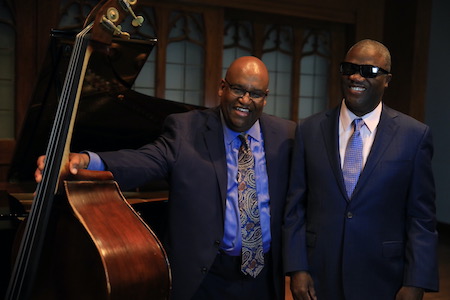
Rodney Jordan (left) and Marcus Roberts.
(Photo: Megan Mowrey)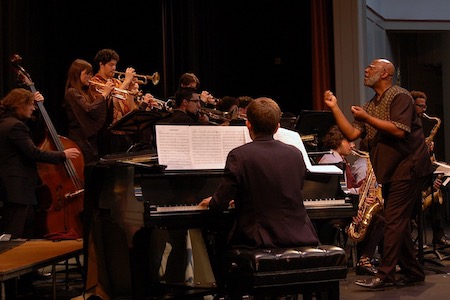
Mitch Butler rehearses the William Paterson Jazz Orchestra.
(Photo: Shyla Murray)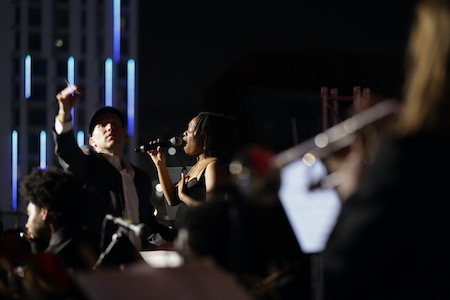
Jordan Goldman conducts at the Thornton School.
(Photo: Becky Sapp)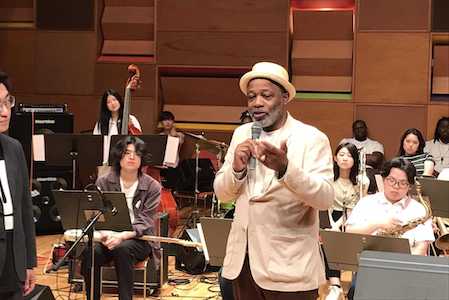
Rodney Whitaker speaks to students at Michigan State.
(Photo: Courtesy Michigan State University)A generation ago, high school music students thinking about applying to jazz studies programs at the collegiate level had two choices in terms of a degree: jazz performance or jazz education.
But for the graduating class of 2027, the jazz degree choices at a growing number of collegiate jazz programs have expanded to include many other options. In addition, some jazz studies programs have added courses — and even degrees or minors — in areas such as music technology and music management.
Given those added variables, students choosing which collegiate programs to apply to may have questions and concerns about which degree path is right for them. And if a student has been accepted into a jazz studies program and made the decision to pursue a specific degree — what happens if they change their mind about their major?
These are valid concerns in an increasingly complex process for students choosing a direction to pursue.
Because it’s such an essential focus of getting on the right path for your college experience, DownBeat contacted four jazz studies programs to get their thoughts on the evolving jazz educational environment.
Florida State University
Rodney Jordan has been on the faculty at Florida State University in Tallahassee since 2001 and now serves as the Coordinator of Jazz and Music Industry, a title that reflects Florida State’s expanded music course and degree offerings.
“I became the coordinator officially in 2022, and we’ve added new faculty positions and a new Music Business major, so we’re now officially referred to as the Jazz and Music Industry area at FSU,” Jordan explained. “With our new Music Business Degree, we’re attracting more students, and new student enrollment is dramatically higher than expected. Students can now major in Jazz, Commercial Music, Music Business and Music Education.
“Within these majors, there are several degree offerings to choose from that have unique course offerings. In addition, construction for our new Music Innovation Lab is anticipated to be completed by late spring 2027. It will have a 9.1.4 Dolby Atmos mixing suite, plus a 28-speaker immersive audio system for spatial sound, collaborative production, and interactive music technology instruction, professional recording, mixing and AI-enabled creative workflows.”
According to Jordan, Jazz Music majors are incorporating Commercial Music classes into their curriculum.
“Within the Jazz Major, elective options allow them to get some experience in courses that interest them,” he said. “Some of our students opt for the commercial music major because they have a passion for music production, recording, arranging and composing for film.”
In terms of counseling and advising students who may want to change their musical degree path, Jordan noted that the Jazz Studies area has created a new office of student success to assist students in finding the right pathway to a degree that works best for them.
“The student success office advisors help students focus on their course of study and how it relates to what they see themselves doing in the future,” said Jordan. “Approved adjustments to the curriculum as well as major changes when needed are possible. If needed, we try to make these changes by the second year of study.”
Thornton School of Music at USC
In addition to serving on the faculty of the Thornton School of Music as Jazz Chair, and Professor of Practice, Jason Goldman has impressive professional credentials as a saxophonist, record producer, composer, arranger and engineer. He’s enthusiastic about Thornton’s implementation of music technology classes over the past few years — and the addition of Bachelor of Music–Music Production and Bachelor of Science–Music Industry degrees. He also sees the value of electives in these areas for students pursuing a Jazz Studies degree.
“All of our Jazz Studies undergrads are now required to take two business courses: an Intro to Music Business course as well as Careers in Music, which is focused on career development,” he explained. “In addition, they also choose four units of Music Technology courses from a list that includes topics like MIDI sequencing and website design. They can select ones they think will be most beneficial for them. It’s important for them to understand how the music industry functions in terms of contracts, legality of copyright and getting music out to public.”
Goldman also emphasized that all Jazz Studies students have an advisor to help them with academic and personal issues. Beyond that, Jazz Studies faculty as well as faculty in Music Industry and Music Technology are also available in terms of advising.
“Our faculty totals about 20, and we only have 80 students in Jazz Studies, so we know our students quite well,” he explained. “Every year we’re asking them what’s your plan for the coming year, your plan for after school and making a living — complicated questions, especially for a jazz musician. We’re there for them.”
William Paterson University
Located in northern New Jersey 18 miles away from New York City’s kinetic jazz scene, William Paterson University limits the number of students in its Jazz Studies program to approximately 65 undergrads and 20 grad students in any school year.
David Demsey retired last year as Jazz Studies Coordinator and continues to serve as curator of the University’s Living Jazz Archives. He and current Coordinator, Mitch Butler, worked together in the 2025–’26 academic year to make the transition as seamless as possible for the students in the program, who can work toward degrees in Performance and Music Education as well as degrees in Music and Entertainment Industries and Sound Engineering Arts.
“The University added a master’s degree in jazz studies in 2000, and now we have these other degree options,” said Demsey. “In addition, students getting a Jazz Studies degree can add Music and Entertainment Industries and Sound Engineering Arts courses as electives to expand their knowledge in those other areas.”
At William Paterson the core courses for the Jazz Studies curriculum can be met in a three-year time frame, allowing students working toward their degrees enough space to take courses in Music and Entertainment and Music Technology that can help increase their knowledge in those fields.
“Students can choose a musical discipline as their main vehicle, but can still pursue secondary interests,” said Butler. “If you’re performing in a jazz ensemble, you can enhance that by taking an SEA class and learning more about recording technology, for example, or a music business course about contracts. You can also double major in jazz and classical. It’s interesting that you can combine many areas or just focus on a performance degree and get a quality educational experience.”
The coordinator position also requires dealing with students who may not be certain about what degree they want to focus on at a certain point.
“It’s a wide-ranging position that’s for sure,” said Butler. “Students come to you to talk, call you or email you almost every day. You need to help make sure things are on track for them, academically, musically and personally. They have concerns about what they want to do and the career path they want to take. At the end of day they’re still 18-to-20 years old and come to you with the same problems of anyone at that age. My motivation is to help them talk through the issues and help find a path that works for them.”
Michigan State University
Not all college and university Jazz Studies programs are expanding beyond Performance and Music Education degrees. And for high school graduates who are strongly focused on following one of those degree paths, a programs like Michigan State University’s may be a logical choice. Renowned bassist Rodney Whitaker, Director of Jazz Studies, joined the MSU faculty in 1994 and was a key contributor in shaping the Bachelor of Arts degree in Jazz Studies in 2001.
“As we followed the pedagogy of putting the program together through course requirements such as theory and composition, we also focused on ear-training, specific instrument requirements and entrepreneurship,” Whitaker explained. “And as we designed the program, we thought about the essential needs for a student to make sure they had the best opportunity to be successful in the real world. So, the program is really designed in that way.”
Whitaker also underscored the importance of making sure students in the program have a strong involvement in community — both locally and throughout the state of Michigan.
“We want to raise students who are mission minded, so our ensembles regularly go out to communities across Michigan,” he said. “We bring guest artists with them to both rural and urban communities. And that’s part of our student’s education — as well as educating the students in those schools where they perform. Students need that exposure to see what’s happening in the community and in music education — and it’s great experience in playing in a variety of settings.”
MSU Jazz Studies also has a strong focus on making sure students have support during their time in the program. The Running Start program presents events and workshops covering topics such as self-promotion, resume-writing, building a private studio and constructing a teaching philosophy. Students also have advisors to help with issues, and Whitaker and the rest of the faculty are there for support as well.
“I teach a class every year with all the freshmen,” Whitaker said. “They know if they have a problem they can come to me, our faculty and our staff. This fall, we have 40 freshmen, up from 20 last year. It’s going to be a full class!” DB
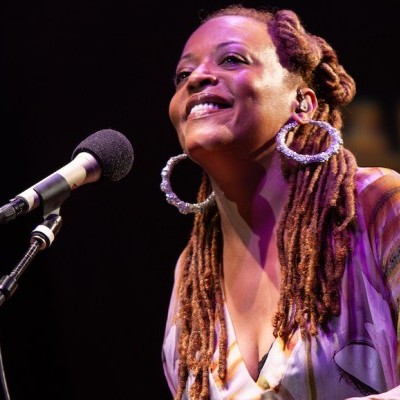
Wilson’s ability to connect to audiences helped her to win two Grammy awards and multiple other accolades. She was named an NEA Jazz Master in 2022.
Sep 3, 2026 10:44 AM
Cassandra Wilson, a singer, songwriter and producer who was one of the most acclaimed and successful jazz vocalists of…
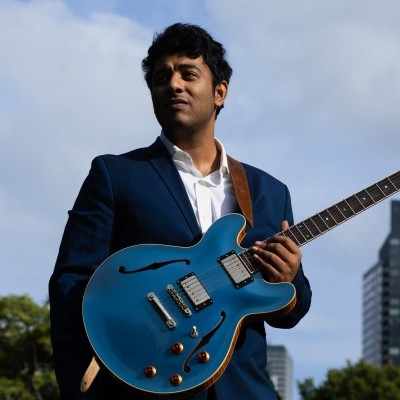
“The love from the jazz and music community restored my faith in humanity,” Walia wrote in an online post upon his release from detention at an ICE facility.
Aug 18, 2026 2:15 PM
Indian jazz guitarist and composer Pritesh Walia has been released after being unexpectedly detained by ICE and taken…
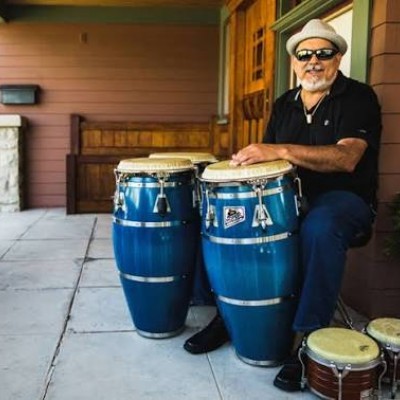
Percussionist Poncho Sanchez was among the artists scheduled to perform at the now-canceled inaugural LA Jazz Festival.
Aug 11, 2026 12:53 PM
The inaugural LA Jazz Festival, originally scheduled to run Aug. 7–23 with dozens of events across Los Angeles’…
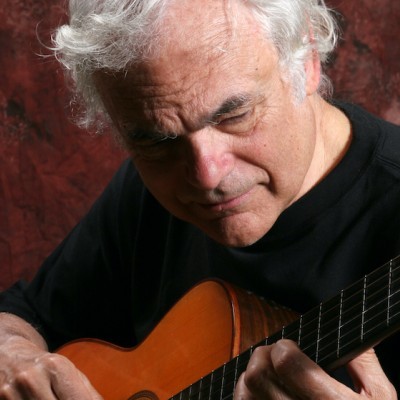
Bertoncini was a specialist and advocate for the nylon-string acoustic guitar, turning down high-profile opportunities that were unsuited to the sound and techniques that he used with that instrument.
Sep 1, 2026 11:06 AM
Gene Bertoncini, an esteemed jazz guitarist, composer, arranger and educator, died Aug. 29 at the Lillian Booth Actors…
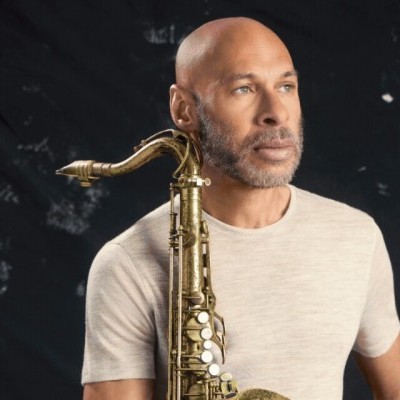
A solo concert by saxophonist Joshua Redman will close the first night of the Hyde Park Jazz Festival on Sept. 26.
Sep 22, 2026 12:26 PM
The Hyde Park Jazz Festival will take place for the 20th time on the final weekend of September 2026. Beginning half…