Sep 22, 2026 12:26 PM
Hyde Park Jazz Fest on Chicago’s South Side to Present 20th Edition
The Hyde Park Jazz Festival will take place for the 20th time on the final weekend of September 2026. Beginning half…

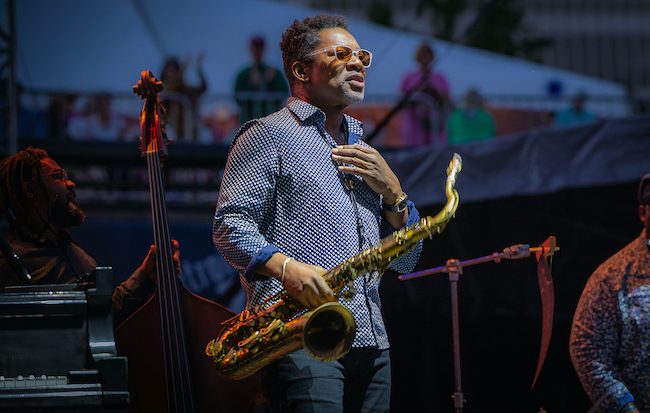
Ravi Coltrane on stage during the Detroit Jazz Festival’s John Coltrane Centennial Celebration.
(Photo: Michael Jackson)Distinguishing infrastructure updates at this year’s Motor City bonanza, the world’s biggest free jazz festival, included a focused festival footprint in downtown Detroit’s 40,000-capacity, 14-acre Hart Plaza. The location of the JP Morgan Stage, previously in picturesque Cadillac Square, posed traffic and ambulatory challenges, and from now on resides by the Detroit River, as far as possible, across the cement expanse of the Plaza, from the main Carhartt Amphitheater and the adjacent Waterfront Stage, the latter newly baffled to limit sound spill.
Despite the significant convenience of this easily accessible new stage, which has both standing and seated attributes, two ascendant new venues, Detroit Jazz Hall and Dee Dee Bridgewater’s Jazz Cafe, located in Wayne State’s imposing Gretchen C Valade Jazz Center, reside two-and-a-half miles north of the festival grounds. The main performance hall there has a capacity of 325, with Dee Dee’s spot about a third the size and as yet—it just opened for the festival—lacking the legendary charm of its Detroit-born namesake, who starred at the Morgan stage with regular musical foil Bill Charlap.
Surely a Jeff Dunn photo of Lady Bridgewater could have adorned the walls, as things looked a little dry and scholarly in the space, though it hosted a terrific young late-night band led by bassist Lois Majors, the LoEnd Quintet, winners of the 2026 Collegiate Combo Competition. The long awning outside Dee Dee’s basement recalls the Village Vanguard, but the basement will take some seasons to grow notoriety. The concert hall upstairs was warmed by saxophonist Tia Fuller’s “Fuller Sound”on opening night, aptly named as the quartet includes her sister Shamie Fuller-Royston on piano and nephew Colby Royston on drums.
Detroit Jazz Festival President and Artistic Director Chris Collins was ubiquitous as ever, introducing acts, interviewing visiting Japanese musicians via the MainStage jumbotron, exhaustively and creatively boosting representatives from JPMorgan Chase (who’ve supported the festival for 20 years), Kia cars and Rocket. He could also be caught playing saxophone, soloing behind Roberta Gambarini with the Detroit Jazz Festival Orchestra and hanging late at the Marriott bar, too, in constant confab with both stars and staff. The festival, thanks significantly to the endowment left by Carhartt heiress and philanthropist Gretchen Valade, who passed four years ago at age 97, plus help from key foundations including Arts Midwest, the NEA and the Kresge, Erb and Knight family foundations, continued to be entirely free and undiminished in its 47th edition.
As usual, given Collins is a tenor player, saxophonists were plentiful on the bill, with Artist in Residence Joe Lovano fronting three shows with major groups; John Coltrane’s brilliant fils, Ravi, presenting his own Centennial Celebration on Saturday night; plus other protagonists including Bob Mintzer (Yellowjackets), Nicole Glover (Artemis), Emilio Modeste (Instant Alter and also Cindy Blackman Santana), Jimmy Greene (Ron Carter’s Foresight), Grace Kelly (The Django Festival Allstars) and local gospel and hip-hop influenced up-and-comer Jeffrey Trent. Kelly and Trent, incidentally, both took the performer prize for most arresting hair color.
Drummer Vince Wilburn Jr., who has been tearing up the festival circuit with his Miles Electric Band, honoring the centennial of his uncle, Mr. Davis, opened up festivities Friday night with Miles alumni including musical director Robert Irving, bassist Darryl Jones and percussionists Munyungo Jackson and Mino Cinelu. Though this nonet climaxed their set with the crowd-pleasing ditty “Jean-Pierre” their curated soundscapes—Jean-Paul Bourelly, guitar, trumpeter Theo Croker, turntablist DJ Logic, and additional keyboards from the mercurial Greg Spero completed the band—conjured a seething concoction the Prince of Darkness would, perhaps, have approved. Lovano followed with this his classy, earthy Paramount Quartet, his tenor and G mezzo soprano weaving intriguing originals in perfect accord with Julian Lage on guitar, who spun a captivating intro to Wayne Shorter’s gorgeous “Lady Day.” The group’s organic treatments of material from their recent eponymous ECM release were completely different live.
Yet another centennial celebration convened on Saturday afternoon at the Carhartt Amphitheater, with musical director TK Blue (aka Talib Kibwe) introducing the African Rhythms Alumni Quintet (including dynamic performers bassist Alex Blake and trombonist Ku-umba Frank Lacy) who paid respects to enlightened afrocentric guru Randy Weston, deeply spiritual and uncommonly altruistic, as TK remembered him.
Strong women performers were salient, including young Skylar Tang and her pastel-hued compositions, and another trumpeter, too often overlooked, the brilliant Ingrid Jensen in the ranks of Jazz Journalist Association awardees Artemis. Band founder and pianist Renee Rosnes (who would appear later with Ron Carter) asked if the Artemis audience were OK with the Canadian contingent in the group, given the current state of slightly strained relations between the two countries. She pointed from the Waterfront Stage across the river to Windsor, Ontario, asking, “Do you still like us?” before offering her “Olive Branch” from the band’s third album, Arboresque.
The all-female Artemis’ releases have been on Blue Note, so too the work of Melissa Aldana and pianist Nduduzo Makhathini, thus the unassuming Blue Note honcho and Detroiter Don Was was omnipresent, keeping a watchful on his talent pool. Was’ signing of Makhathini was visionary as the South African is far from categorizable. Indeed, his latest, The Myth We Choose, might even seem “smooth” in surface characteristic yet in part “pays tribute to the Zulu kingdom, its lineage and origins above (emalzulwini) and below (ngaphansi komhlaba)” as Makhathini articulates it on his song “Imvunge”—an invocation of the spirit deities of Ntu. My first encounter with Makhathini was at the Detroit Jazz Festival when DownBeat asked me to Blindfold Test him for the magazine, which proved a distinct pleasure. His late set at Detroit Jazz Hall with heroically named bassist Zwelakhe-Duma Bell le Pere and exciting new drummer Kabelo Mokhatla spilled overtime and was an outstanding moment. Despite his vocal and sampled layerings and dense proselytisms about “linguicide,” “liminal space” and “normative domains,” this writer derived deepest import from “Unembeza,” which featured a delightfully simple, skipping refrain in the left hand. Ironically and nonchalantly, “Unembeza” concerns the end of the world, which will, as Makhathini predicts it, not witness material destruction and fiery demise, so much as the loss of human conscience.
The late-night trek to the Gretchen Valade Center (I eventually learned there was a shuttle) had proven worthwhile the eve before, where a completely different vibe pervaded, reminding why some of us were drawn to jazz in the first place. South Seattle’s Delvon Lamarr has been grinding out grooves with his organ trio since 2015, after switching from trumpet, and his barnstorming B-3 set with guitarist Brice Calvin and punchy Kalamazoo drummer Ashley Ickes was impossible to ditch due to magnetic ants-in-pants.
Celebrated singers at the fest included Kurt Elling, Bridgewater, Catherine Russell and French born, NOLA-based charmer Cyrille Aimée. Another Blue Note signee held court at the Carhartt Amphitheater on Sunday, Gabrielle Cavassa. I may have glossed Cavassa’s significant contributions to Joshua Redman’s 2023 travelogue where we are (Blue Note) in a prior review with “cappuccino-voiced,” or some such, but discovered in Detroit that she had more edge. The achy malaise of “Raindrops…” and her own “Bossy Nova,” not to mention the mournful Brazilian ballad “To Say Goodbye,” which Sarah Vaughan’s 1981 album Copacabana shook down to the depths of despair, Cavassa sung into a retro telephone-shaped mic. This suggested missing someone back home, who, given a later song about a treacherous lover, might not be trustworthy. The title of Cavassa’s Blue Note debut Diavola is Italian for dangerous temptress, and she conveyed a strong message that she is not to be underestimated.
Though Detroit’s programming focuses on straightahead blue chip artists, less mainstream music is also represented, in this case by the fest’s 2026 Legacy Artist, bassist Jaribu Shahid, who saluted the AACM with a sextet featuring saxophonists Tony Holland and Steve Grady and trumpeter Allen Dennard.
Japanese pianist Himiko Kikuchi, has been making cultural exchanges with her “Tottori JAZZ” at the festival since 2019. Before I knew better I had assumed Ndudozo Makhathini was Japanese and made the same mistake about the group Teiku, who made an early afternoon set on Monday. Teiku actually refers to an Aramaic word meaning “unanswered question,” and it was a shame to miss pianist Josh Barlow’s group reviving ancestral Jewish Passover melodies with bass clarinetist Jason Stein and Shadid again. One really has to keep a sharp eye on the schedule at DJF.
As for Makhathini, he reappeared for the phenomenal festival finale comprising Joe Lovano’s Coltrane 100 supergroup with remarkable Chilean tenorist Melissa Aldana, bassist Linda May Han Oh and drummer Jeff “Tain” Watts. This quintet came on strong with John Coltrane’s “Locomotion” from his landmark 1957 album Blue Train (Blue Note), which proved the perfect vehicle for Aldana and Lovano’s blistering virtuosity and bottomless invention. Makhathini had revealed his affinity with late compatriot Abdullah Ibrahim’s gentle melodies in his trio set, but hear how he can channel McCoy Tyner’s torrential style when apposite. May Hah Oh delivered a beautiful bass solo after the head to “Naima,” which had been reprised stunningly by Ravi Coltrane two nights prior, and the group gave space for subtle hand percussion plus Lovano’s flute, beyond erstwhile freighted forward motion.
One sincerely hopes the festival recorded this closing set, as it capped Lovano’s residency superbly. DB
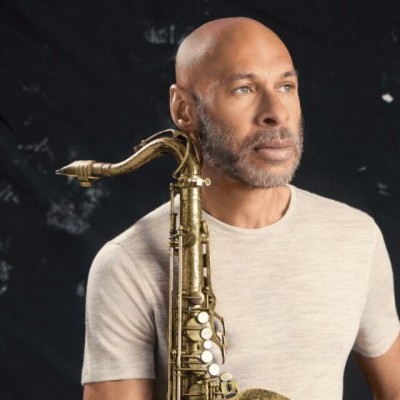
A solo concert by saxophonist Joshua Redman will close the first night of the Hyde Park Jazz Festival on Sept. 26.
Sep 22, 2026 12:26 PM
The Hyde Park Jazz Festival will take place for the 20th time on the final weekend of September 2026. Beginning half…
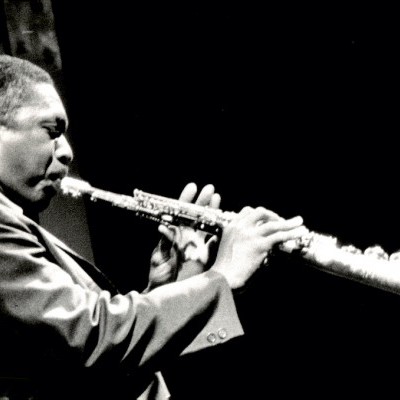
“It was just that suddenly … I could hear it,” Ravi Coltrane said of an epiphany he experienced during his late teens regarding his father’s music. “And it was almost like a calling, like something saying, ‘Hey, man, come on. It’s time to get serious.’ And the first time you really tune in and dial in and focus like that, it can be very life-changing.”
Sep 22, 2026 1:39 PM
Editor’s Note: Tomorrow, Sept. 23, is the 100th anniversary of John Coltrane’s birth. In honor of the tenor and…
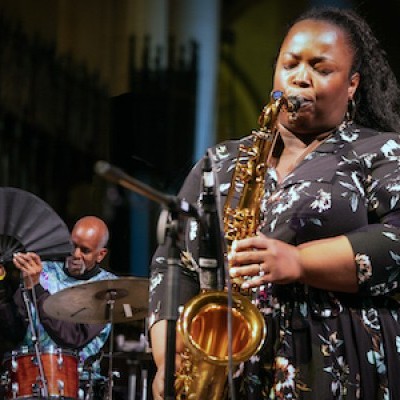
Camille Thurman took to the stage alongside bassist Kenny Davis and drummer Tommy Campbell for a rendition of Johnny Mercer’s “I’m An Old Cowhand” that recalled Rollins’ epochal 1957 trio outing Way Out West.
Oct 6, 2026 1:33 PM
As emcee Mark Ruffin noted at the commencement of an epic tribute to saxophonist Sonny Rollins at the Cathedral of…
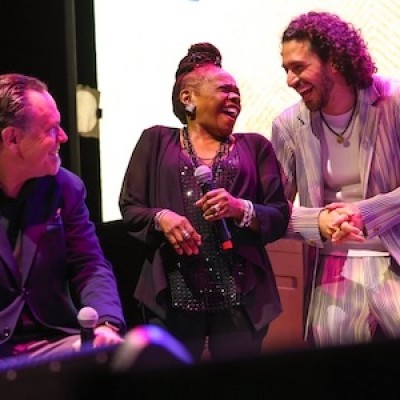
Kurt Elling, Katherine Russell and Emmet Cohen (host on the 2027 Jazz Cruise) share a laugh at sea.
Sep 8, 2026 11:52 AM
It began in 2001. A travel agent named Anita E. Berry had been booking clients on “partial” jazz cruises that took…
Record producer Bob Thiele’s classic photo that became the cover of John Coltrane’s landmark album A Love Supreme.
Sep 22, 2026 1:36 PM
A tribute to John Coltrane is one thing, but there is much more to the iconic saxophonist’s 100th anniversary…