Oct 6, 2026 1:33 PM
Sonny Rollins Gets an Epic Send-Off in Manhattan
As emcee Mark Ruffin noted at the commencement of an epic tribute to saxophonist Sonny Rollins at the Cathedral of Saint…


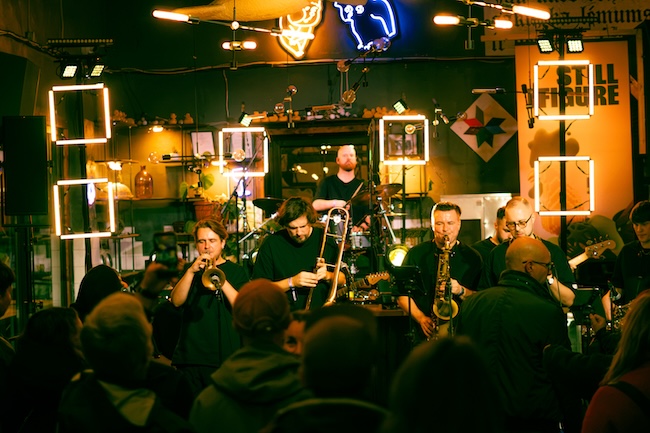
The Vilnius Jjazz Ensemble performs at the Hedgehog during Riga Music Week in Latvia.
(Photo: Aleksandra Stepanova)Next April’s massive jazzahead! will present the three Baltic states as its partner region. This mega-trade fair in Bremen, Germany, is also an artist showcase and conference, set to highlight acts from Estonia, Lithuania and Latvia, which lie as far as we can go in Eastern Europe without hitting Russia. The second edition of Riga Music Week happened in Riga, Latvia, on Nov. 4–6, mostly concentrating on Latvian artists, but also including a strong contingent from Estonia and Lithuania, as well as a few visitors from the rest of the European Union.
RMW is modeled on the more established TMW (Tallinn Music Week), which is massive in scale, by comparison, having been established almost two decades earlier. RMW is contrastingly intimate, with its two evenings of showcases spread over seven stages, all of them in very close proximity to each other. The key jazz-zone was Ezītis Miglā (translated as Hedgehog In The Fog), which was also the most appealing showcase venue, being a vibrant bar with a lived-in coziness.
Lupa (from Latvia) played early, releasing their brutal fusion force into the crammed side-room, fast-crashing (and even fast-crushing) with their howling keyboards, uppity alto saxophone, pulsing flood-bass and drum-shop bashing. Despite such lack of subtlety, their music was quite complex, relishing its powerful dominance, until playing “French Song,” a slinky ballad.
Trio Elpo (also Latvian) also impressed, technically a piano trio, but steering away from what that might usually suggest. Together for a decade, they’re signed to Jersika Records, the prime Latvian label for adventurous jazz, operated by Mareks Ameriks, often seen hauling his full reel-to-reel recording setup to live shows.
The best act at the Hedgehog played right at the end, around The Witching Hour. Ironically, the Vilnius Jjazz Ensemble hail from neighboring Lithuania rather than Latvia. Since your scribe last witnessed them in trio form at Tallinn Music Week in 2025, they’ve now grown to a swollen bunch of nine intense players, with a flap-bass sound, drums thundering mightily, up on a high platform, fronted by trumpet and roaring alto and tenor saxophones, the latter even taking time to deliver a soulful, calmed-down solo. With trombone (played by leader and composer Jievaras Jasinskis), guitar and keyboards also in the spread, the sound is excitingly diverse. “The Green Mountain” represented snickety funk, running into “Two-Faced,” which was pointillist and delicate to begin, with heaviness ensuing, horns cutting aggressively.
On the third night, events were spread around the city as “club nights,” with the hottest destination being Riga’s prime jazz venue, M/Darbnica, which is quite close to the RMW hub. It’s a converted old house, opened up during the pandemic times, and now redecorated to an even higher standard than back in 2021. This House Of Jazz has a moody atmosphere, with low lighting in its upstairs concert room, tables spread around in club fashion. It’s run by Maija Moira Mazanova, a major influential presence on the Riga scene. The evening presented four diverse acts, ranging from hardcore jazz to innovative electronics, with funky soul and folky improvisation also included, all maintaining sonic diversity.
The Vadims Dmitrijevs Quintet topped the night, led by the local trombonist-composer, which is always a thrill on the jazz front. We need more ’bones! Dmitrijevs had already impressed during the jam session at this club during the Rigas Ritmi festival in 2021. The rest of the quintet lineup featured alto saxophone, guitar, bass and drums. Seeking serenity, the band were restful, at least for a while, as a grooving, soulful jazz unwound. The palette was in the Blue Note line, making a slinking progress, with angular guitar from Jānis Pastars and a garrulous trombone solo from the leader. Their set seemed much too short.
Earlier, the Sise duo delivered an exceptional set, taking electronic modular synth pulsations and eccentric ambient chitter vocals into an unknown zone. Evija Vēbere and Elīna Silova were garbed in netted costumes, cosmic aprons with apiary-keeper’s gauze hoods enshrouding, carapaces glowing, plastic tubes winding around their bodies as they swapped vocal snatches and threaded out digital scurf. They cooed to each other in Bjork-ian fashion, the songs subject to repeats and slicing, with beats growing fast, seeding the space with a ghost-like pumping, making a blobular cycling until an eventual crumbling and sputtering conclusion. Rarely are electronics so warmingly inviting.
Julianna and Artis Boris represented the pleasing side of funky soul-jazz fusion, with strong vocals underlined by a pair of backing vocalists, perhaps inspired by a band such as the Brand New Heavies. There was a fine balance between acoustic and electric guitars, crafting an unusual blend.
Marsa had opened the evening, with two folk-inspired singers, upright piano, pliable bass and skipping drums. The balance between folk and jazz was also well-judged, with the material collectively penned from within the band.
There were a striking pair of Latvian rock bands on the M stage, two nights earlier. Les Attitudes Spectrales sounded quite mild when your scribe spun their recorded work, but emerged as a totally different beast on the live stage, thunderously loud, plungingly heavy in their grinding slow-riff majesty. They harked back to the more extreme grind of the 1990s, as deep sludge seeped out from the M stage (a venue that was blankly featureless when compared with the Hedgehog bar).
Kočāns Miķelis was superior in a altered way, combining the roles of singer, drummer, composer and chief disruptive entertainer, surrounded by his multi-instrumental crew. There was a particular running changeover between the keyboardists, involving extra time on guitar and tenor saxophone. Miķelis seems to describe his songs as neo-schlager (the old-skool German bier keller pop-form), but his quirky stop-start stutter-arrangements also suggest a welding of progressive rock, razor-blading punk, twitchy disco and free-jazz. This band has it all, everything that can be imagined, as flyaway aggression is lent an intellectually ironic overview. DB
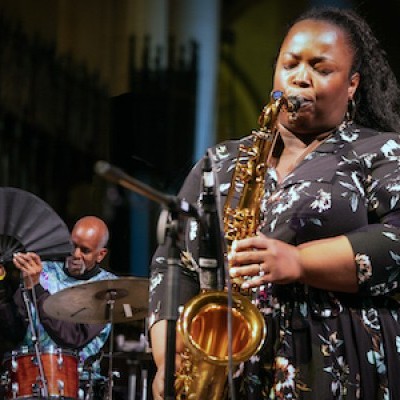
Camille Thurman took to the stage alongside bassist Kenny Davis and drummer Tommy Campbell for a rendition of Johnny Mercer’s “I’m An Old Cowhand” that recalled Rollins’ epochal 1957 trio outing Way Out West.
Oct 6, 2026 1:33 PM
As emcee Mark Ruffin noted at the commencement of an epic tribute to saxophonist Sonny Rollins at the Cathedral of Saint…
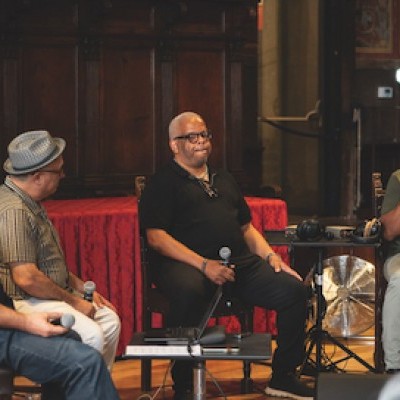
Ravi Coltrane (right) makes a point during a live Blindfold Test at the Umbria Jazz Festival while pianist Greg Burk (far left), journalist Ashley Kahn and trumpeter Terence Blanchard listen.
Oct 20, 2026 12:53 PM
The pairing of Terence Blanchard and Ravi Coltrane was billed as “The Miles/Coltrane Legacy,” a tour celebrating the…
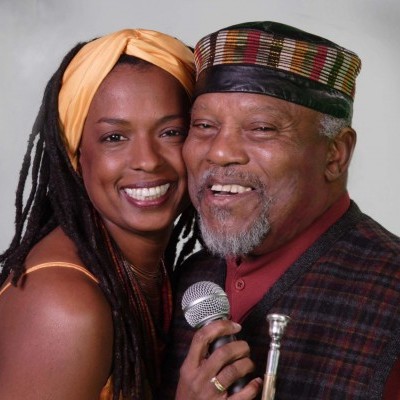
For trumpeter Marcus Belgrave (1936–2015), shown here with his wife, Joan, teaching meant more than developing instrumental technique. It meant helping musicians understand the history they were inheriting and the immense responsibility that came with it.
Oct 20, 2026 12:35 PM
In a standout scene from …And Damn, He Could Play: The Marcus Belgrave Story, bassist Endea Owens discusses a…
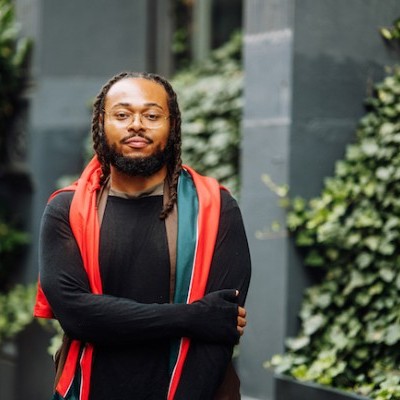
Alto saxophonist and composer Immanuel Wilkins has been named a 2026 MacArthur fellow.
Sep 29, 2026 11:30 AM
Immanuel Wilkins, an alto saxophonist, composer, bandleader and Blue Note recording artist based in Brooklyn, New York,…

Lalah Hathaway entranced fans at this year’s Pittsburgh International Jazz Festival.
Sep 29, 2026 11:20 AM
Reinforcing modern jazz’s interaction with other genres associated with Black American music remains a hallmark of the…