Sep 3, 2026 10:44 AM
In Memoriam: Cassandra Wilson, 1955–2026
Cassandra Wilson, a singer, songwriter and producer who was one of the most acclaimed and successful jazz vocalists of…


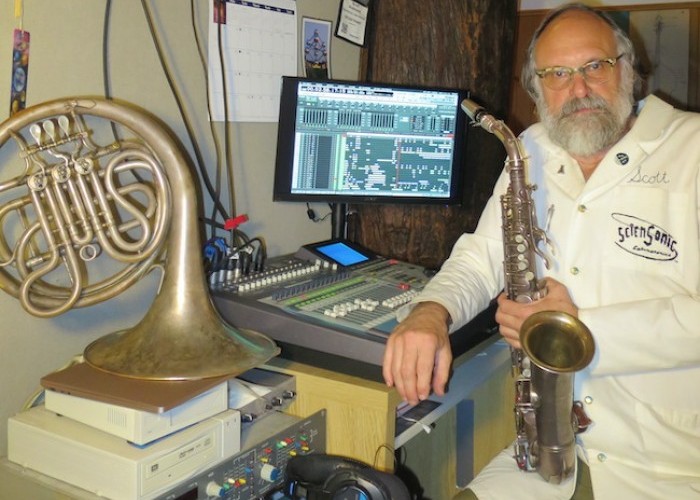
Scott Robinson, shown here in “The Lab,” will play a recording of the first movement from his long-term project Reach For Tomorrow on Thursday, Oct. 1, at Hunter College in Manhattan.
(Photo: Courtesy Scott Robinson)What would a 200-piece orchestra including three contrabass saxophones, five tarogatos, solovox, bass marimba, electric doorbell organ, tower chimes, bass/contrabass banjos and 9-foot Philippine temple drum sound like? I’ve been trying for seven years to find out.
Since the late 1990s, when Roscoe Mitchell sent me his beautiful, overdubbed solo album Sound Songs, I have wondered what kind of amazing sounds I could create through overdubbing, with the hundreds of rare woodwind, brass, percussion and electronic instruments I have amassed throughout my decades-long obsession with sound. How about a giant orchestra, the kind you could never actually assemble anywhere on Earth? An orchestra with sarrusophones, theremins, slide saxophones, contrabass oboes, etc.? If I had a facility to do it in, I could overdub entire sections of instruments so rare that only one or two actually exist in the world. I could create a large-scale symphony, of the kind heard only in my dreams.
But at that time I was living in an apartment, where things had become unmanageable. The large kettle-drum I’d been using mostly as a coffee table had gotten buried under piles of instrument cases. The incredible bass marimba that Sun Ra played on Heliocentric Worlds in 1965 stood in a corner of the room, barricaded in by piles of horns, cymbals and gongs. In another room, two sets of metal shelves held wind instruments of every description along with theremins, gadgets and parts. It had gotten to where I couldn’t use much of what I had, because it was simply inaccessible. I began to dream of a “laboratory” where I could have everything set up and ready to go, along with the equipment to record.
Well, I am a very slow person. ScienSonic Laboratories was finally completed in 2009, in a building behind my New Jersey house. The Lab is my temple of sound, the sacred space where I work on music every day that I’m not on the road, usually quite late at night after the gig. A stream of creative and unusual albums have emanated from the Lab, including collaborations with Roscoe, Marshall Allen, Milford Graves and many others. But, still, I was slow to begin work on the mammoth symphonic project I had long imagined.
A little over seven years ago I reached my 60th birthday: a sobering milestone that brought home the realization that if I wanted to see this project through, I had better get started. The following day I finally began work on my one-man, improvised, four-movement symphonic work that I expect will take a good 20 years to complete, if not more — the sort of thing one might call a magnum opus. My peculiar process is painstakingly slow and deliberate, and quite solitary.
The basic method is this: I improvise something and record it. If I like it, I add to it. If not, I try again. All thematic material is improvised (unless I am revisiting or developing a theme that was improvised earlier). All vertical harmonies are built up strictly by ear, one note at a time, made up as I go. Each time I work on the piece I add whatever I hear, on whatever instrument or instruments I hear playing it. Some sessions are spent finding just the right little bell or shaker to add the needed color. When a section feels complete, I move forward.
This is a new way of making music — certainly for me, anyway — and it has been exciting to discover just some of what is possible with the many sound sources I have available.
I have certain rules concerning the creative methodology for this piece:
Is it jazz? Concert music? I don’t know. The whole thing is improvised, but at such a slow and careful rate that it sounds more like composition — which it is, in a way — and yet there is nothing written. It is a very unusual way of making music for 200 instruments. I’ve never done anything like it, and don’t know of any other examples. “Will it be performed live?” people ask me. No. It never could be. There is no score, and even if there were, no such orchestra could ever be assembled; there aren’t enough of these instruments in the world. It can only exist as the recording I have made.
Earlier this year, just after returning from a lengthy European tour, I turned 67. And I can now report that, seven years into this project, I have finally completed the first movement of my symphony. It consists of about 13 minutes of music, fully mixed, in a rough sonata form, for more than 200 instruments including saxophones, woodwinds, brass, mallets, percussion, some strings and vintage electronics — all of it played only by myself.
My plan was to not let anyone hear the work until the whole thing was completed (other than a teensy snippet I posted on YouTube). But with the first movement completed, trombonist Ryan Keberle proposed hosting a listening/lecture event at Hunter College in Manhattan, where he teaches. Given how long this has taken, I’ve decided to accept his kind offer. So, on Thursday, Oct. 1, at 7 p.m., in Hunter College’s Lang Recital Hall, I will play the recording of the first movement, talk about the process and take questions from any who are curious and care to attend. This event will be free and open to the public.
Meanwhile, the daily work continues. I hope and expect that the two inner movements will progress more quickly than the first. But I know that the fourth will be a bear.
Oh, yes, one more thing: The title of the piece is Reach For Tomorrow, a title which has taken on extra significance given the six-hour cancer surgery I recently underwent (while still keeping up my daily work on the piece, I am pleased to say). I seem to be fine now, but the experience serves as a reminder that none of us have forever, and I figure that Reach For Tomorrow is at least a 20-year project, likely more.
Should have started sooner.
Wish me luck!
For more information on Thursday’s listening event, visit sciensonic.net. DB
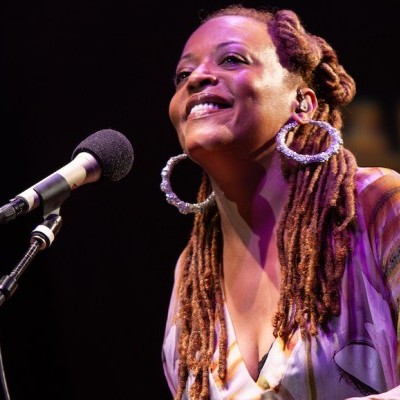
Wilson’s ability to connect to audiences helped her to win two Grammy awards and multiple other accolades. She was named an NEA Jazz Master in 2022.
Sep 3, 2026 10:44 AM
Cassandra Wilson, a singer, songwriter and producer who was one of the most acclaimed and successful jazz vocalists of…
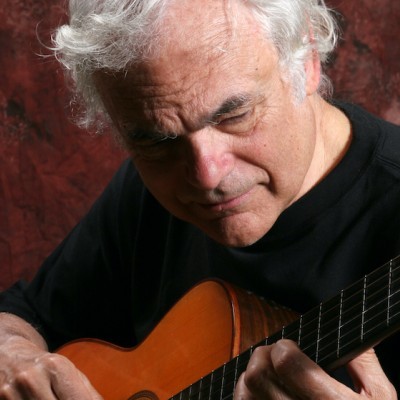
Bertoncini was a specialist and advocate for the nylon-string acoustic guitar, turning down high-profile opportunities that were unsuited to the sound and techniques that he used with that instrument.
Sep 1, 2026 11:06 AM
Gene Bertoncini, an esteemed jazz guitarist, composer, arranger and educator, died Aug. 29 at the Lillian Booth Actors…
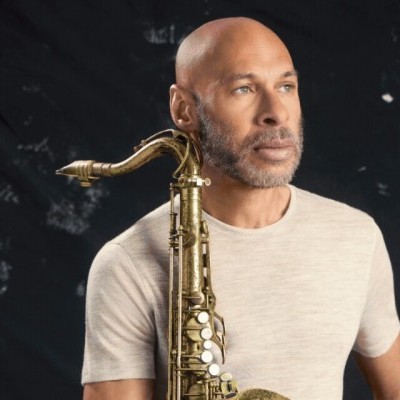
A solo concert by saxophonist Joshua Redman will close the first night of the Hyde Park Jazz Festival on Sept. 26.
Sep 22, 2026 12:26 PM
The Hyde Park Jazz Festival will take place for the 20th time on the final weekend of September 2026. Beginning half…
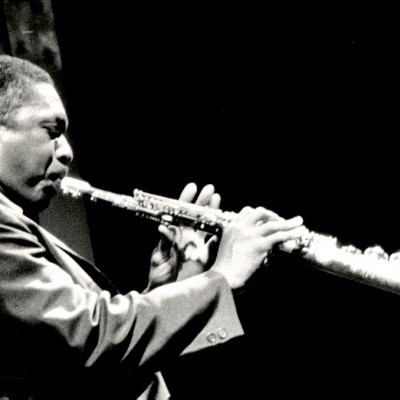
“It was just that suddenly … I could hear it,” Ravi Coltrane said of an epiphany he experienced during his late teens regarding his father’s music. “And it was almost like a calling, like something saying, ‘Hey, man, come on. It’s time to get serious.’ And the first time you really tune in and dial in and focus like that, it can be very life-changing.”
Sep 22, 2026 1:39 PM
Editor’s Note: Tomorrow, Sept. 23, is the 100th anniversary of John Coltrane’s birth. In honor of the tenor and…
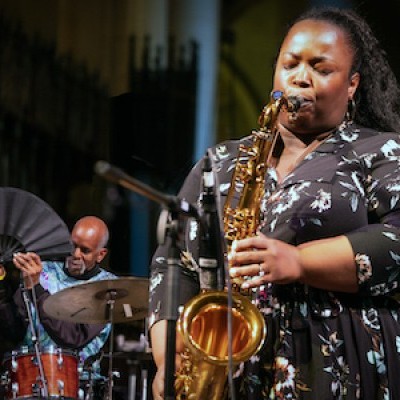
Camille Thurman took to the stage alongside bassist Kenny Davis and drummer Tommy Campbell for a rendition of Johnny Mercer’s “I’m An Old Cowhand” that recalled Rollins’ epochal 1957 trio outing Way Out West.
Oct 6, 2026 1:33 PM
As emcee Mark Ruffin noted at the commencement of an epic tribute to saxophonist Sonny Rollins at the Cathedral of…