Sep 3, 2026 10:44 AM
In Memoriam: Cassandra Wilson, 1955–2026
Cassandra Wilson, a singer, songwriter and producer who was one of the most acclaimed and successful jazz vocalists of…


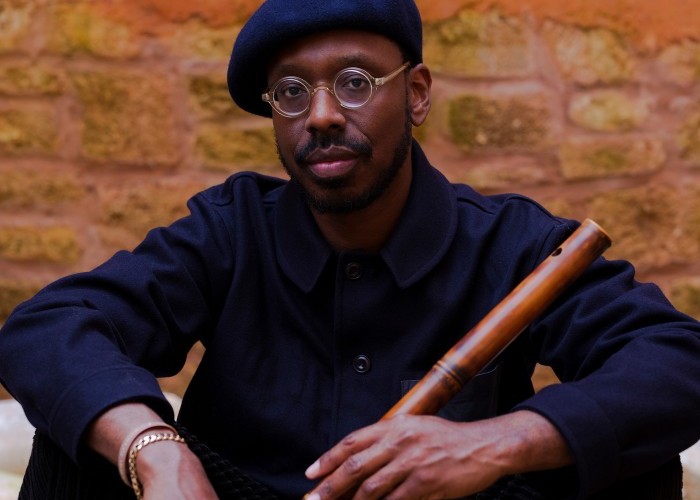
“If you’re creative, then it means that you can approach anything with a creative spirit and just do your best at it,” says Shabaka.
(Photo: Joseph Ouechen)In the fall of 2023, this writer first witnessed a saxophonist from the U.K. on stage at the Hollywood Bowl, surrounded by a string orchestra and a myriad of electronic and acoustic keyboardists. It was the one and only live performance of Promises, a landmark album by the minimalist artist Floating Points, who had invited Pharoah Sanders to be the centerpiece and beating heart of his nine-part, 46-minute-long composition. Sanders was scheduled to perform at the Bowl but had tragically passed away mere months prior, making the concert a tribute to the legendary figure. And so, Floating Points turned to his friend, Shabaka Hutchings, with whom he shared a love and personal connection to Sanders.
Shabaka channeled Sanders’ aura while imbuing the performance with his own reflections. Yet as he played his tenor that night, he knew it would perhaps be one of the last times he ever played that instrument. The ensuing years of transferring his artistry into other modes of expression beyond the saxophone are encapsulated in Of The Earth, a self-produced solo album that is Shabaka’s most personal artistic statement to date.
While he may not be a household name in the U.S. yet, Shabaka is of a steadily cresting wave of creative jazz artists from the U.K., since 2013 when his co-led band Sons of Kemet burst onto the London scene with a celebratory blend of jazz with rock, Afrobeat and Caribbean dance rhythms. Shabaka continued to push the envelope with the Afro-funk band Melt Yourself Down, the electro-psychedelic trio The Comet Is Coming, and Shabaka and the Ancestors, a group he formed in Johannesburg during one his many sojourns to South Africa. The infusing of jazz with a categorically global rock and funk groove element has produced a signature sound that is distinctly London.
“To understand where we’re at in terms of the creative music scene, you’ve got to step away from what’s at the forefront right now, because there’s a whole bunch of musicians that were the building blocks of what we’re seeing today,” Shabaka explained, citing artists like multi-instrumentalist and producer Kaidi Tatham, and drummer Seb Rochford and guitarist Pete Wareham from the bands Polar Bear and Acoustic Ladyland.
He has flourished, in large part, due to his collaborations with musicians like these, both in London and abroad. But at the same time, Shabaka has been working on music that is all his own, recording snippets of audio during his travels. “Just making music on buses and in airport lounges and in bedrooms for a few years now,” he said. He’s invested in some portable audio gear, but nothing too elaborate. “It feels like in a lot of the jazz world, the driving force in the production is to make things sound cleaner and more expensive,” he said, preferring a more “left-leaning hip-hop” aesthetic like the work of Armand Hammer and Billy Woods. “It’s not about the production getting shiny and glittery. It’s about making it reflect the story of the music.”
That story has been shaped by his fascination with the flute. During the pandemic, Shabaka began practicing various bamboo flutes, including the Japanese shakuhachi and the Brazilian pifano, realizing he wanted that sound in his music. “There was a point when I just wanted to practice the flute all the time, not because I was great at the flute, but because I could feel like there was something in the character ... how my body responded to playing [it].”
Which led Shabaka to the drastic decision to step away from the saxophone. “If the sax is always at my disposal,” he explained, “whenever I come to a musical point where the sax is the most likely option, then I’ll take that. Whereas for like a year and a half, I only played the flute. I had to figure out how to use the instrument in all these different capacities, and how to articulate myself with this new voice. So, it was mainly a matter of bringing the private practice into the public and not having a split way — in public playing mainly saxophone, but in private trying to get better at flute.”
A year prior to his performance at the Bowl, Shabaka was already a visitor to Los Angeles when percussionist and producer Carlos Niño invited him to a recording session by hip-hop musician-turned flutist Andre 3000. Shabaka ended up recording on one of the tracks on New Blue Sun, the album announcing Andre 3000’s stunning transfiguration from rapper to instrumental jazz artist. In return, the former Outkast member recorded on Shabaka’s projects — first on his EP Progression, and then on his most recent LP, Perceive Its Beauty, Acknowledge Its Grace.
“Andre is a really open musician. He’s more open than many musicians that I know,” said Shabaka of his flute colleague. “He’s a searcher, searching for experiences in sound. I respect that he’s able to keep that curiosity and actually have the courage to go on stage with no net and reflect that curiosity in public.
“The industry as a body wants to be able to define what we are,” he continued. “And I think the more that we can subvert these definitions and bring questions into the equation, the better everyone will be for it.” In an ironic inverse parallel, just as the rapper Andre 3000 became a flutist, Shabaka the flutist has also become for the first time a rapper, writing and giving voice to lyrics on a number of tracks on his new album.
“I really am not a rapper,” he admitted, noting his spoken word experience was limited to participating in poetry slam events years ago. “It was just something where I decided I would like to rap on the album. ... If you’re creative, then it means that you can approach anything with a creative spirit and just do your best at it.” Shabaka researched a lot of hip-hop music, noting in particular how rappers ended their phrases, yet taking care to develop his own personal rapping style.
“I didn’t want to try to sound like anyone because it’s my voice. It’s like putting on an accent, like you’re an actor. It was a little bit more difficult to figure out what my actual tone of voice was and what my level of intensity naturally is when I use my voice. It took a long time of listening to myself and reflecting on it. But I think I got there in the end.”
And in the end, Shabaka was able to turn his newfound curiosities and impromptu recordings into a cohesive, compelling declaration of an artistry grounded in new things. Of The Earth is an eclectic mix of beats, percussion, lots of flute, some rapping and ... saxophone. “At the time, I could have walked away [from the saxophone] forever,” Shabaka admitted. But he decided to pick it up last June at a memorial concert for Louis Moholo, a South African jazz drummer whom Shabaka had played with for many years. And once he started playing, he realized he still loved the saxophone. He confessed, “Once the hiatus was up, it was up. But the interesting thing was that I started to consider the sax as just one of my many instruments as opposed to the sax being my primary instrument. And I think that’s the ultimate lesson: What I’ve come away with from that period is the saxophone being democratized. Not being representative of who I am. It’s [now] one of many instruments in my palette.”
The journey away from and back to the saxophone has helped Shabaka to discover a larger sense of his artistic identity. “The main turning point with the album for me was when I started to consider myself as a producer. I’ve done a lot of production of albums, all the albums on Native Records [his own label]. But it was a different type of producer ... not a producer in terms of actually creating the music. And I think that’s maybe the difference between the producer and performer, in that the performer is engaged in what’s happening in the moment, whereas the producer is the person who sees that moment in relation to the wider scheme of an album, and then actually sees the album in relation to the wider scheme of where it sits in the world of music.” Certainly, Shabaka now has multiple vantage points in that world — greater perspective from 10,000 feet, while his feet are still firmly planted in the soil. DB
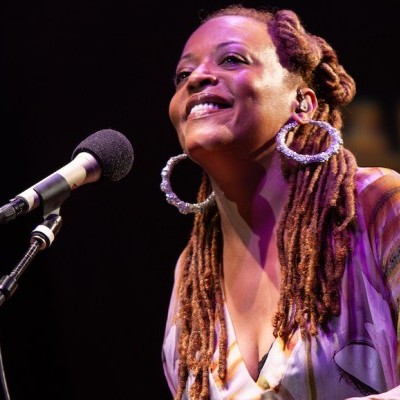
Wilson’s ability to connect to audiences helped her to win two Grammy awards and multiple other accolades. She was named an NEA Jazz Master in 2022.
Sep 3, 2026 10:44 AM
Cassandra Wilson, a singer, songwriter and producer who was one of the most acclaimed and successful jazz vocalists of…
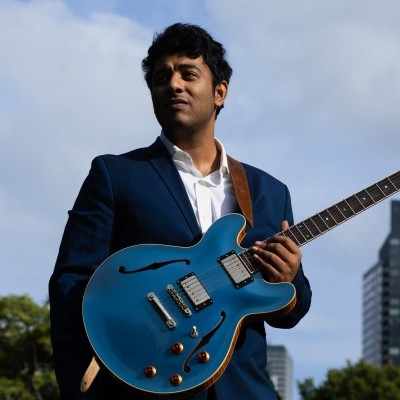
“The love from the jazz and music community restored my faith in humanity,” Walia wrote in an online post upon his release from detention at an ICE facility.
Aug 18, 2026 2:15 PM
Indian jazz guitarist and composer Pritesh Walia has been released after being unexpectedly detained by ICE and taken…
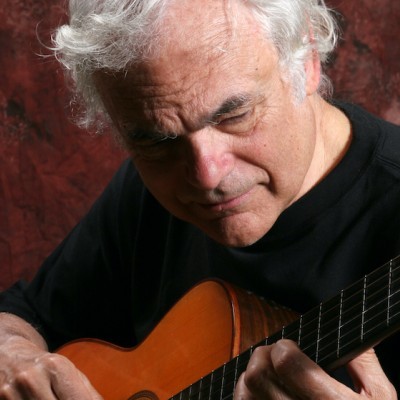
Bertoncini was a specialist and advocate for the nylon-string acoustic guitar, turning down high-profile opportunities that were unsuited to the sound and techniques that he used with that instrument.
Sep 1, 2026 11:06 AM
Gene Bertoncini, an esteemed jazz guitarist, composer, arranger and educator, died Aug. 29 at the Lillian Booth Actors…
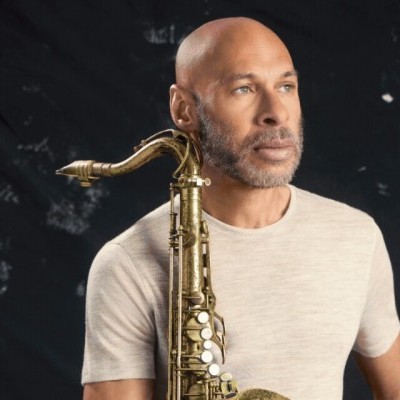
A solo concert by saxophonist Joshua Redman will close the first night of the Hyde Park Jazz Festival on Sept. 26.
Sep 22, 2026 12:26 PM
The Hyde Park Jazz Festival will take place for the 20th time on the final weekend of September 2026. Beginning half…
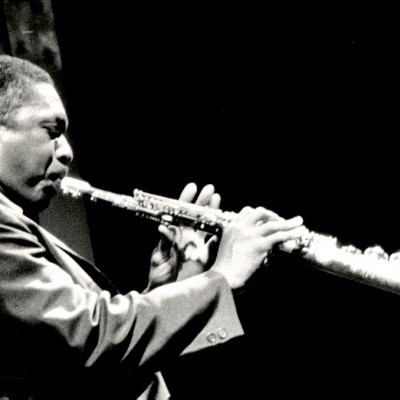
“It was just that suddenly … I could hear it,” Ravi Coltrane said of an epiphany he experienced during his late teens regarding his father’s music. “And it was almost like a calling, like something saying, ‘Hey, man, come on. It’s time to get serious.’ And the first time you really tune in and dial in and focus like that, it can be very life-changing.”
Sep 22, 2026 1:39 PM
Editor’s Note: Tomorrow, Sept. 23, is the 100th anniversary of John Coltrane’s birth. In honor of the tenor and…