Sep 3, 2026 10:44 AM
In Memoriam: Cassandra Wilson, 1955–2026
Cassandra Wilson, a singer, songwriter and producer who was one of the most acclaimed and successful jazz vocalists of…


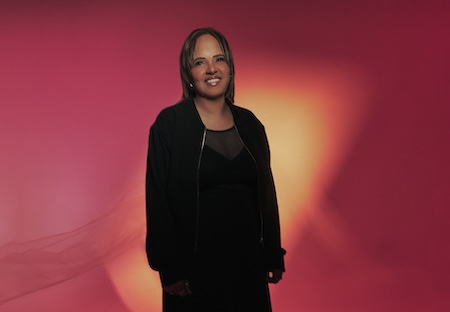
“Are you for the whole or are you for yourself only?” says Terri Lyne Carrington. “There’s a balance because we live in a capitalist society.”
(Photo: Meredith Truax)“Toni Morrison said that during these kinds of more critical times, ‘Artists go to work.’ So the one thing I do feel is that our work right now as artists is more important than ever.” Looking at the ever-growing body of experience cultivated by drummer, educator, composer and activist Terri Lyne Carrington, her musings on the words of author Toni Morrison prompt a contrasting question: When hasn’t Carrington gone to work — particularly during critical times? Be it for the betterment of students at Berklee’s School of Jazz and Gender Justice, for the collaborative support of other artists’ works or for the uplifting of under-recognized voices in the arts and beyond, wherever Carrington speaks or plays, confident and positive messages for the improvement of society are front and center.
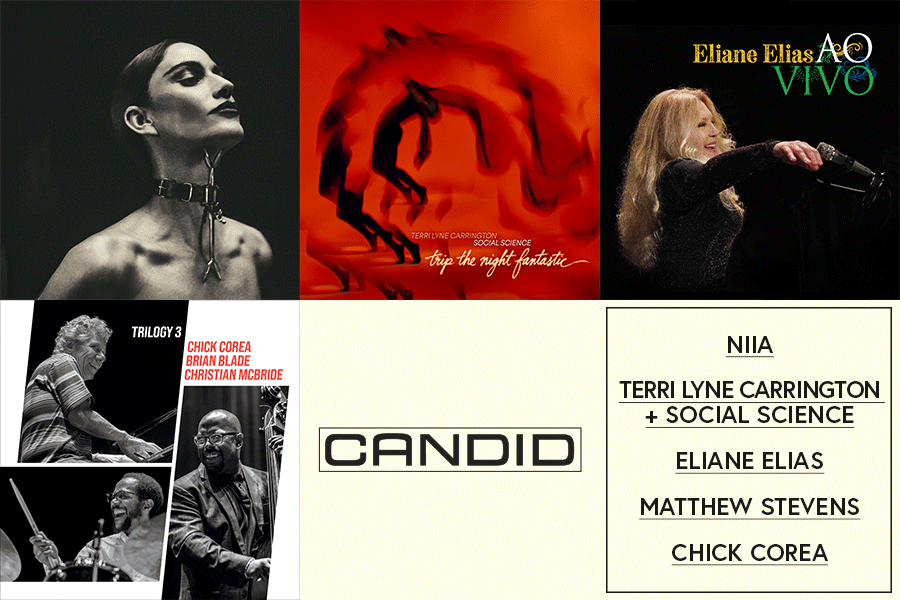
Following We Insist 2025!, Carrington’s Grammy-nominated, civil rights-focused tribute to the classic Max Roach album that she created with vocalist Christie Dashiell, Carrington’s socially conscious fire continues to burn with her latest project, Trip The Night Fantastic (Candid), recorded with Aaron Parks, Matthew Stevens and Morgan Guerin, Carrington’s cohorts in Social Science. The quartet reunites for the first time since 2019’s Waiting Game, steadfast as ever in their dedication to making music that’s both sonically compelling and thematically outspoken about individual and collective forms of struggle, oppression and crisis.
The collective-mindedness of the album is also built into its vast company of more than a dozen emcees, spoken word artists and instrumentalists, each bringing depth, color and impactful expression to the 13 tracks of the album. As a whole, it’s cohesive in its conversational scope. Yet, topics addressed — from the African diaspora and Black feminism to child trafficking, animal cruelty, gender identity, for-profit prisons, climate change, political partisanship and more — are deep enough to be their own fully formed universes, which Carrington and Social Science created and share in song form.
Carrington spoke with DownBeat, unpacking the emotional tolls built into many of the album’s themes, recalling how the album found its balance between bringing the party and sharing a message as well as reflecting on which aspects of her writing style help shape the vision behind these songs and more.
Kira Grunenberg: Where between hopeful and weary did you tend to feel your spirit was when first writing these songs?
Terri Lyne Carrington: I don’t really get so weary. I guess I do, on a personal level, but I tend to live more in the hopeful area because I feel like I’m a serial optimist.
I used to feel like I’m having fun playing music, and my life is pretty charmed, and maybe I should be doing more on the front lines or doing more for the process I believe in. I started taking this work that we do more seriously and realized, yes, it’s a part of the overall solution. It’s a part of the energy of moving toward something better.
There’s this great memory of Angela Davis telling me how Nina Simone went to visit [Davis] when she was in jail and [Simone] said, “What can I do? I feel like I’m not doing anything. I’m not doing enough. What can I do?” And Angela said, “No, you are. Your music is great and a lot of it is protest music and that is your job.” So I started thinking, “OK, if Nina Simone was thinking she wasn’t doing enough, I understand that sentiment, and let me just take my job as seriously as I can.”
Grunenberg: As someone who says they’re “about collectivism versus individualism,” how do you navigate the distinction between the idea of coming together as one and embracing differences?
Carrington: It’s a mindset. Are you for the whole or are you for yourself only? There’s a balance because we live in a capitalist society. I’m not saying that I want to suffer or not enjoy my life to make sure that everybody else’s life is good. I want to enjoy my life. I want to take care of myself. I’m not a saint in that way. I don’t know — I go back and forth. I feel like if we all gave up a little more so that more people could have a better life, I think that would be not a lot to ask.
If you create music that’s safer, I feel like you’re not giving up as much. You’re not risking as much because you’re playing it safe and trying to protect something: a way that you think the world wants you to be so that you can succeed. If that’s your mindset, then I mean, I don’t know, it probably comes out in your music, and I’m probably not so excited about that kind of thing. It’s so interesting, because when I really kind of let go of any of those kinds of thoughts about what other people think, what might be successful or what’s not, and I started, not taking more risks, but just being more authentic to what I believe, it feels like my career blossomed as soon as I started to talk about things that were important. So that teaches you immediately, to follow what’s important to you.
Grunenberg: How difficult does the vision of “Abolition Song” feel, particularly the idea of rejecting greed, given the U.S.’s capitalist system and its intrinsic connection to the “American Dream”?
Carrington: I guess I didn’t think about it like that because I think a lot of people don’t look at the prison system as a for-profit system. I think people have been brainwashed to have fear of other people and the first thing you want to do if you’re fearful of other people is, put them away — put them as far away from you as possible and lock them up. I think America has done a great job of installing fear in people and not looking at the root cause of crime or the root cause of so many things like mental health.
I couldn’t wrap my brain around not having this kind of prison system for many years because of fear. I feel like fear is also what makes people stay in check so you’re not going to go against the system because you’re afraid. You don’t want to go to jail. You don’t want to be on the wrong side of it. I just think that once we realize, “This is really all to make money,” once you can wrap your brain around that, I think you can then start to see the ideas of abolition and that they don’t seem so far fetched. It’s kind of an awakening needs to happen and it takes time, like all awakenings.
But to bring it back to jazz: How many decades did people really kind of not pay attention to the fact that there weren’t women playing jazz, you know? It’s because everybody just thought, “This is what’s normal.” But when you look at it, it’s one of the most ridiculous things there could be, that this is an excuse that only men can really play. It’s fascinating to look at trying to formulate ideas around why this happened. It’s the same [thought process] with probably half of these issues [on the album].
Grunenberg: How did you discern when and where on the album you would inspire dancing versus emphasizing grounded reality to underscore the struggles each song describes?
Carrington: Most jazz musicians that I know are smart, open-minded and really want to be on the right side of things, want to expand, but also just laugh and have fun.
I think you can’t separate who you are from your heart, Like Wayne Shorter said, “I’m not what I do, I do what I am.” That really resonates with me. I feel like I’m a fun person to be around, and so when I hear music, I want to dance. I want music to move me in all kinds of ways: mentally and spiritually but also just physically I want it to move my body.
There’s a lot to celebrate in life, and I’m not going to let all the heaviness of life take away my fun, take away my desire to celebrate, or my right to have joy and express joy. So that always kind of has to come out in some way or another. But this album, in the beginning we said, “Let’s make a dance record!” But, like, our version of a dance record just means let’s make some music that’s creatively oriented that [also] might make people bop their head.
Grunenberg: Many of the visions and changes that drive these songs are contingent on the idea of a shift in perspective and mentality — effectively changing what’s in people’s hearts to embrace a culture of caring for one another — in order to not only change social system but to make the changes stick. What traits of your approach to composing/arranging do you feel are most effective in helping to initiate this kind of deep-seated change?
Carrington: I do think about the marriage of melodies and harmonies in a way that pulls at the heart or pulls at the heart in different ways — not melancholy or sad, but reflective.
I feel like it’s got to have a certain kind of cleverness to it so that you’re not just hitting people over the head with these messages, and so that you hopefully make people come to their own conclusions, even though you’re sort of saying certain things and giving a point of view, but it’s in a way hopefully that makes people think about it also in their own way, through their own lens. That’s my style of writing lyrics and messages. But musically, then you have to marry these words and messages with melodies that make sense. And not just make sense but that make the messages even stronger.
There are some people, like Stevie Wonder, for example, he’s a great example of somebody who can take words and put melodies together that nobody else can really pull off so well because sometimes the melodies don’t exactly feel like the natural fit but he’s able to say words in odd ways sometimes because that’s authentic to him. So everybody has to figure out a way to do that match that is authentic to them. That’s what makes a great songwriter, a great songwriter — by figuring out how to marry all those things. So for me, it’s just pulling at what I think is hip, over the course of 55 years of listening to music so intensely.
Grunenberg: How did you determine the album’s track sequence? Ending with “Reckoning Song” and a sentiment of standing ready feels true to life and what’s needed right now. On the other hand, a track like “Blues Song” feels fitting for a more reassuring, aspirational mindset for the future. What convinced you that the album needed one arc over another?
Carrington: It’s funny because I actually thought that ending with “Reckoning Song” is ending it with a nice, neat little bow because “Reckoning Song” is a bit of an outlier. It’s kind of a rock song. It’s just different musically than the rest of the album.
But the call-to-action and non-complacency and to engage and protect democracy, I think that’s the neat bow to end the album: Coming to a reckoning and coming to a place of, “I’m not gonna take it anymore!” and rallying the troops, I believe that’s what “Reckoning Song” is, and I think that’s the strongest way to close the album, because it’s a rallying song. But it’s all up for interpretation. Everybody needs something different.
The thing that you’re talking about, as far as feeling that you’d be beaten up so much with what’s going on around us and the that idea that [you’d want to hear], “Everything’s going to be OK,” I think you hear “Blues Song” and you kind of get that healing feeling. And then “Reckoning Song” is saying, “OK, now that you have that, now let’s go kick some ass.” DB
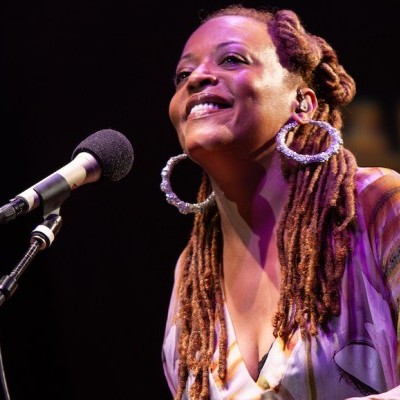
Wilson’s ability to connect to audiences helped her to win two Grammy awards and multiple other accolades. She was named an NEA Jazz Master in 2022.
Sep 3, 2026 10:44 AM
Cassandra Wilson, a singer, songwriter and producer who was one of the most acclaimed and successful jazz vocalists of…
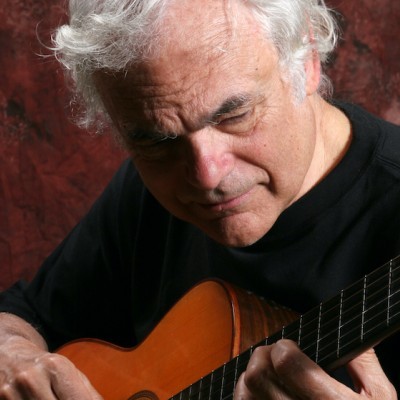
Bertoncini was a specialist and advocate for the nylon-string acoustic guitar, turning down high-profile opportunities that were unsuited to the sound and techniques that he used with that instrument.
Sep 1, 2026 11:06 AM
Gene Bertoncini, an esteemed jazz guitarist, composer, arranger and educator, died Aug. 29 at the Lillian Booth Actors…
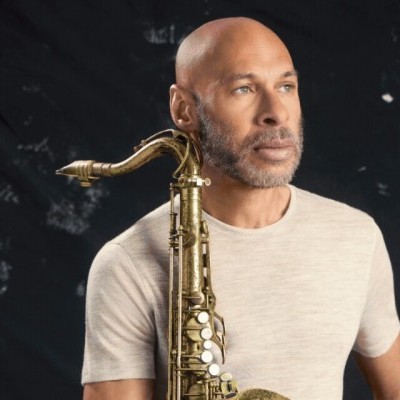
A solo concert by saxophonist Joshua Redman will close the first night of the Hyde Park Jazz Festival on Sept. 26.
Sep 22, 2026 12:26 PM
The Hyde Park Jazz Festival will take place for the 20th time on the final weekend of September 2026. Beginning half…
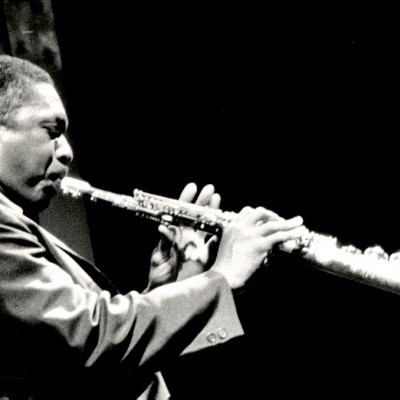
“It was just that suddenly … I could hear it,” Ravi Coltrane said of an epiphany he experienced during his late teens regarding his father’s music. “And it was almost like a calling, like something saying, ‘Hey, man, come on. It’s time to get serious.’ And the first time you really tune in and dial in and focus like that, it can be very life-changing.”
Sep 22, 2026 1:39 PM
Editor’s Note: Tomorrow, Sept. 23, is the 100th anniversary of John Coltrane’s birth. In honor of the tenor and…
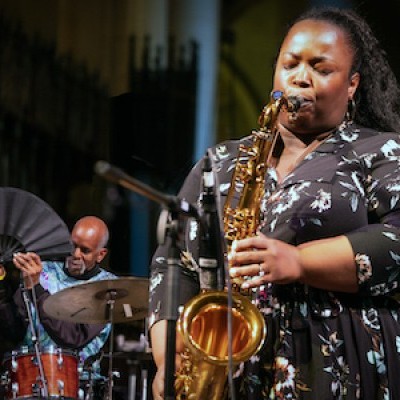
Camille Thurman took to the stage alongside bassist Kenny Davis and drummer Tommy Campbell for a rendition of Johnny Mercer’s “I’m An Old Cowhand” that recalled Rollins’ epochal 1957 trio outing Way Out West.
Oct 6, 2026 1:33 PM
As emcee Mark Ruffin noted at the commencement of an epic tribute to saxophonist Sonny Rollins at the Cathedral of…