Sep 3, 2026 10:44 AM
In Memoriam: Cassandra Wilson, 1955–2026
Cassandra Wilson, a singer, songwriter and producer who was one of the most acclaimed and successful jazz vocalists of…


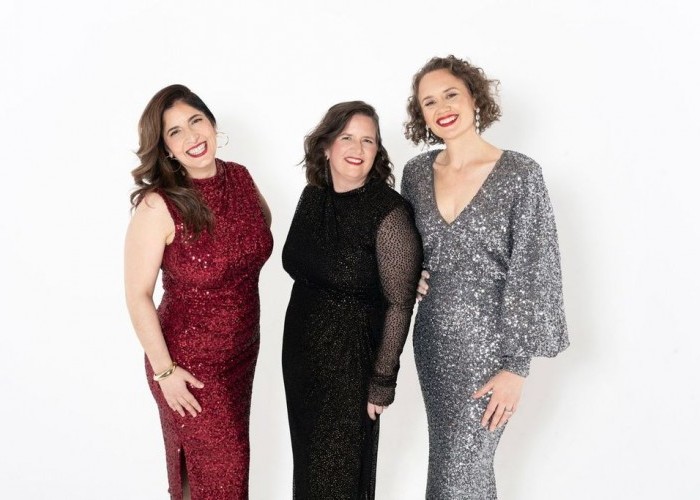
The members of Duchess, from left, Melissa Stylianou, Amy Cervini and Hilary Gardner.
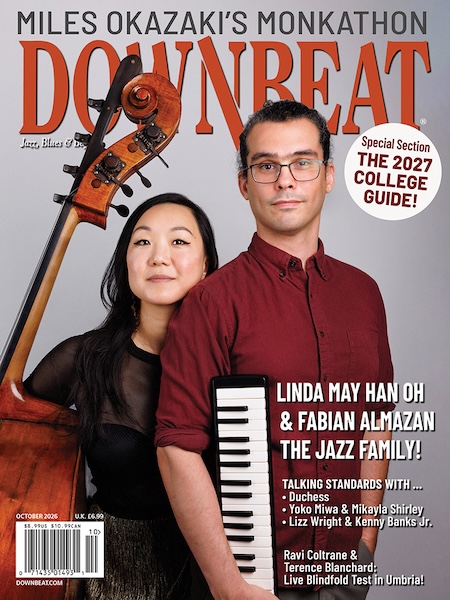
(Photo: Drew Reynolds)Why do standards endure? Duchess, Yoko Miwa & Mikayla Shirley and Lizz Wright & Kenny Banks Jr. offer very personal reflections on the love of performing classic secular and gospel songs.
It’s interesting that in 2026, as the pool of songs that meet the Cambridge Online Dictionary definition of “standard” (“popular and often played over a long period of time”) includes not only the various American popular music genres and sub-genres of the last 60 years, but also an international array of languages, dialects and sub-dialects, jazz musicians — especially jazz singers — continue to associate the term with the Great American Songbook, a canon encompassing the multitude of well-crafted songs generated for vaudeville, musical theater, film, radio, dance bands and big bands between the first World War and the early ’60s.
“I think that body of work we call standards is great art, and it survived for a reason,” said Oded Lev-Ari, who arranged nine such songs for A Marvelous Party (Anzic), his fifth album for Duchess, the three-voice harmony group that Amy Cervini, Hilary Gardner and Melissa Stylianou, distinctive New York solo singers and close friends, convened in 2013 after Lev-Ari suggested to Cervini (his wife) a one-set project of Andrews Sisters and Boswell Sisters charts at Manhattan’s 55 Bar. “Many songs were popular in their day, but didn’t remain relevant through time.”
Titled after an insinuating Noel Coward set piece from 1928, A Marvelous Party is Duchess’ first fully programmatic album and the first with no solo features, as the members sing Lev-Ari’s bespoke scores with impeccable craft, sustaining a one-voice feel as they anticipate the party’s delights, the shenanigans that ensue and the disillusion when the fun ends and real life (“there’s only one way off of this ride”) reasserts itself.
The curated phrasing of the elegantly harmonized voices of three decidedly post-feminist professionals depicting pre-feminist perspectives could suggest ironic archness. “At least some of the songs connect to the 1920s Weimar Republic,” Lev-Ari countered. “We’re not the first to point out similarities between then and now. It tells me things haven’t really changed.”
“I don’t like irony in music,” Gardner stated flatly on a morning Zoom call with her partners from a Cincinnati hotel. “If something is really strong and solid and you come at it with purity of heart, you don’t have to make it tongue-in-cheek, like shoehorning a top-40 pop hit into the style of the Andrews Sisters. The musical architecture of Songbook era standards lends itself to singing together in close harmony and taking the music, but not ourselves, seriously.”
Each member discovered that architecture through different portals. Gardner, raised in rural Alaska, grew up singing to her family’s eclectic, high-quality record collection, studied classical voice from age 12, did musical theater, sang country and standards, while aspiring “to get out of Alaska and be a jazz singer in New York.” She arrived in 2003. “Now I’m singing country music again,” Gardner joked of her recent solo release, On The Trail With The Western Pines. “You can’t fight who you are.”
Cervini and Stylianou are Torontonians. Cervini played saxophone and piano in her mom’s big band, before she began to sing the band’s Manhattan Transfer–New York Voices vocal component. A self-described “musical theater nerd,” she knew her mother’s Andrews Sisters charts but met the “loopier” Boswell Sisters only when Duchess started delving into the repertoire. She avoids or deconstructs standards on her four solo albums. “Other people did them so much better,” she said. “I find it delightful that Duchess is my vehicle for standards.”
As a teenager, Stylianou fell in love with the Songbook while singing along to Harry Connick’s records, and began to sing them during the ’90s swing revival with a popular Andrews Sisters transcription act in vintage Army uniforms. “A standard is any well-made song with words, or a melody, or a harmonic structure for something you wish to express, and our repertoire expresses exactly what we want through Oded’s arrangements,” she said.
Operating within a “Duchess is/Duchess isn’t” preamble (no pop tunes, not a tribute band), the members suggest repertoire on a shared spreadsheet, with Lev-Ari the final decider; they, in turn, review his arrangements, correcting lyrics and tweaking keys. Gardner compares their high-spirited simpatico to the Rat Pack sensibility — referenced with “Ain’t That A Kick In The Head,” a Dean Martin vehicle in Oceans Eleven — of “good friends making high-level music and laughing the whole time.”
“When we started Duchess, the world was different and we were at different stages in our lives,” Cervini said. “But the foundation of choosing joy and sharing it with others remains. We’re not blind. We see what’s out there. We aren’t being overt or explicit about it.”
Gardner mentioned Cervini’s morning-walk observation that “we’re seeing a crop of young vocalists whose bread-and-butter is standing up front of a traditional instrumentation and putting over, without a whisper of irony, an Irving Berlin or Cole Porter song. We came up in this weird cocktail of being pressured to say something new, but then being scolded for it, like who’s jazz and who’s not. Now, given the political sphere at large, it seems there’s a push back to more traditional roles, with a lot of swinging.”
Each member credited Cécile McLorin Salvant as a generationally inspirational figure for establishing, as Cervini put it, “love and respect for the song rather than the idiom, and bringing herself into whatever she sings” as a default template. “You don’t think, ‘That’s Cécile doing Ella.’ No, it’s Cécile. She’s doing that.”
One of the aforementioned young vocalists is Mikayla Shirley. She sings 13 standards of various provenance with pianist Yoko Miwa on Midnight Hour (Cupcakes&Muffins) with pellucid eloquence, fluid phrasing, a no-limits voice and an uncanny ability to find a lyric’s emotional center. Shirley was 14 when she witnessed Salvant’s blend of immaculate craft, extreme individualism and impeccable taste at a 2016 concert in central Pennsylvania. The impact was galvanic.
“Cécile didn’t improvise at all, but had complete control, complete respect from her band,” Shirley recalled. “I had all these loves — metal, Latin, gospel, straightahead jazz. But the way Cécile did jazz embodied its history and lineage, and was so innovative and new and just herself, that I thought, ‘Maybe I could do this.’”
On Midnight Hour, Miwa offers empathic support and occasional commentary as Shirley addresses Gershwin (“I Loves You Porgy” and “But Not For Me”), Bacharach (“Alfie”), classic ballads (“Tenderly”), sophisticated cabaret (“Too Late Now”), Jobim (“Girl From Ipanema” and “Modina”), soul-baring pop (Billy Preston’s “Song Of Joy” and Brian Wilson’s “God Only Knows”) and jazz (“Love Dance” and “Centerpiece”). The title reflects the weekly Friday midnight–1 a.m. duo sets they’ve played since January 2025 at the Mad Monkfish in Cambridge, Massachusetts, where their simpatico developed. Miwa, 56 — who came to Berklee from Japan in 1997 and has taught piano there since 2011 — already played the earlier 7–10 p.m. slot with the trio that’s documented her compositions and arrangements since 2000.
Although Miwa has played with such singers as Dominque Eade, Kevin Mahogany and Sheila Jordan, she never considered folding one into the trio until 2021, when she heard Shirley, then a master’s candidate at Global Jazz Institute. The young vocalist caught Miwa’s ear during a master class by Jordan, and then again at a Sunday jazz vocal jam session. “My God, she’s so good,” Miwa told Scott Goulding, her drummer and husband, who books the Mad Monkfish. “When they launched the midnight set, Scott asked if I wanted to play with her.
“Any music I feel something from, the melody is what hits me. Most younger singers change the melody too much, always scatting to do something different. Mikayla just sings the melody, and says everything. She can scat, too, but it isn’t necessary. We never rehearse; she has a big repertoire, she knows each song from her heart and we spontaneously decide what to play. She makes people cry. In my trio, I will take 10 choruses; for her, probably no more than one. People will be all over her once this record comes out, and I know she’ll change, but I wanted to capture who she is now.”
Shirley started singing before she could talk: “first commercials, then French lullabies and things in Spanish.”
“I love poetry and storytelling, but in my personal life, I wasn’t very good at connecting and communicating with people,” she said. “I had an isolated childhood. I had to take care of my father, and I was exposed to violent things at home. I was bullied in school.”
At 11, her mother enrolled her in the Central Pennsylvania Friends of Jazz program, and she entered its youth band, where band director Ronnie Waters and tenor sax hero Tim Warfield mentored her. Shirley inculcated fundamentals and learned “aurally how to find my way over changes and memorize how things sound.” Meanwhile, her African American grandfather drove her to gigs, played her his LP and CD collection, bought her a keyboard and paid for piano and voice lessons.
At 12, as if to cosign her steep learning curve, Cyrus Chestnut told her she had a gift after accompanying her on “At Last” at a jazz camp.
“It’s the first time I sang duo with an adult professional musician,” Shirley recalled. “After that, I was addicted.” Around then, she sang over a background track to “Someone To Watch Over Me.”
“A woman approached me, crying, and touched my hand. She told me my singing made her think about her dad’s passing and how she’d come to terms with it. Then I understood that singing was my way of connecting with people and healing myself, and also helping others.
“My father is Puerto Rican, and dancing — the drums and rhythm — was a big part of my childhood. I have a white side from my mother and a Black American side from my grandfather. I was the only Latina in an all-Black Baptist gospel church, and the youngest member of the gospel-singing Tri-City Youth Choir. I’m grateful for my mixed family, so that I learned jazz outside school and didn’t view it Eurocentrically as ‘upper class cocktail music.’ For me, jazz was a way to unlock your innermost things. It was life or death. It was suffering. It was joy. It was all these things from the Black American experience and Black Caribbean experience that I was part of. A lot of this music was written by white people for white people, but other musicians rewrote the rules and made it theirs. There’s beauty in seeking freedom through oppression.”
Lizz Wright echoed that sentiment from a different angle on a Zoom call with pianist Kenny Banks, her musical alter ego since 1998, and her duo partner on The Nearness Of You (Blues&Greens/Candid). They braid Songbook-era chestnuts with five canonic gospel touchstones of the Black church with preternatural intuition and effortless mastery.
“My father suggested that if writing or composition is beautiful to you, that’s enough reason to get close to it and learn it,” Wright said. “You may not know why you’re drawn to it until later. You don’t have to be welcomed in by the people it seems to belong to.”
In characteristically magnificent voice, at 46 Wright illuminates “the melodic architecture, storytelling and romance” of the title track, “Just You, Just Me,” and “All The Things You Are” with fluid, playful phrasing, sounding, as always, only like herself. “There’s magic to this treasure chest from that wave of talented writers, some of whom also wrote screenplays and musicals when America was dreaming forward. I love the nuances revealed in every voice that moves through the chords of these songs, just as the way we move through beautifully tailored vintage suits and dresses that we try on tells us a lot about ourselves.”
“I’ve heard and studied these old tunes,” said Banks, who played at Sunday school at age 9 for his home church, St. Paul A.M.E. in Columbus, Ohio. “To me, they reflect the standard of the time they were written. I approach them according to the standard of how I want to live today. It’s super simple. I’m thinking, ‘Let’s break things down a little bit.’ I don’t need the caviar. I just want some bacon and eggs.”
Neither Banks nor Wright followed a “super-simple” path toward publicly performing secular songs that various church folk told Banks would lead him directly to Hell. “I don’t know if they were playing, but I heard people say it, and I struggled to overcome that,” Banks said. He was 13 when he fell under the spell of local organist Bobby Floyd, a master of the Saturday night and Sunday morning functions who “was swinging ‘This Little Light Of Mine’ in a major way, although I didn’t know it.”
As he evolved into a busy local jazz sideman, Banks started “looking for confirmation that what I was doing was OK.”
He found it. He was 20 when, after a sparsely attended gig with steel drum player Othello Molyneaux, a tearful man told him, ‘Thank you, brother. You inspired me. I can now live on another day.’ That confirmation set me free.”
Wright gleaned “most of what I learned about singing” performing ceremonial functions in her father’s sermons from age 5, “addressing the needs of people’s spirit in an upfront, direct manner.” At 11, she discovered Marian McPartland’s weekend Piano Jazz radio show in high school, and began a “quiet and clever rebellion” against her parents’ antipathy to the worldliness of secular music that brought her “very far into jazz at a very young age.”
“Jazz was a great progression for me,” Wright continued. “It was a roomy platform where I could address spirituality in its colorfulness, as life, and talk about God in different contexts. Kenny was the first person who could translate my ideas without much dialogue. In this duo, I explore the notion of nearness in our relationship, which has been a safe and sacred space to heal and to discover.”
Their intimacy is palpable on the gospel tracks, as Wright channels Mahalia Jackson and Aretha Franklin on “Soon I Will Be Done,” “How I Got Over” and “Amazing Grace.” On the latter, Banks accompanies her with a rolling 12/8 line, as he’d done spontaneously at their first bandstand encounter 27 years ago at Atlanta’s Churchill Grounds. “I don’t know if there was a dry eye in the house,” Banks said. “That began our road to where we are now. Our upbringings are so similar; she sang in churches I played in.”
Even so, Wright surprised Banks during soundcheck with an operatic “Deep River.” “He cried and made me stop,” Wright said. “He’d never heard my voice do this thing I didn’t need to do outside of a recital. When I was 22, Dr. Richard Harper showed me that classical vocal technique was not just married to European arias, but a way we found to dig deep into spirituals. I incorporated the breath and tone work into my singing so that I could open up these colors in my voice and feel I’m supposed to be here.
“I will always sing gospel music and sacred music,” Wright asserted. “I need to sing it. I don’t need a prescribed kind of religious person to give my heart of praise permission to open up and release it with its light. It’s a function of my being. I can’t help it.” DB
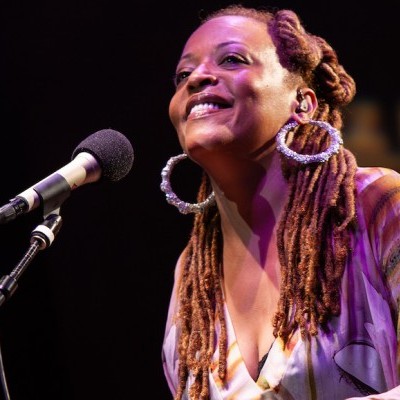
Wilson’s ability to connect to audiences helped her to win two Grammy awards and multiple other accolades. She was named an NEA Jazz Master in 2022.
Sep 3, 2026 10:44 AM
Cassandra Wilson, a singer, songwriter and producer who was one of the most acclaimed and successful jazz vocalists of…
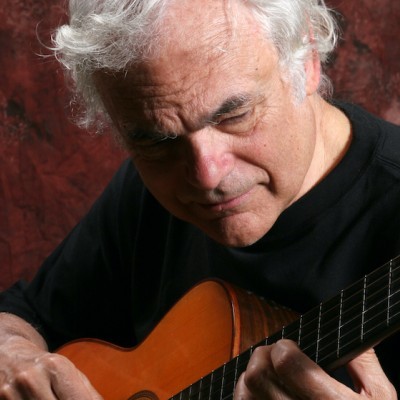
Bertoncini was a specialist and advocate for the nylon-string acoustic guitar, turning down high-profile opportunities that were unsuited to the sound and techniques that he used with that instrument.
Sep 1, 2026 11:06 AM
Gene Bertoncini, an esteemed jazz guitarist, composer, arranger and educator, died Aug. 29 at the Lillian Booth Actors…
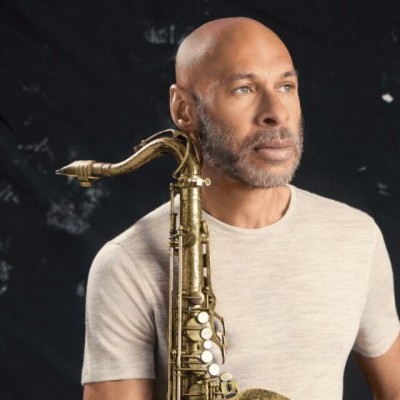
A solo concert by saxophonist Joshua Redman will close the first night of the Hyde Park Jazz Festival on Sept. 26.
Sep 22, 2026 12:26 PM
The Hyde Park Jazz Festival will take place for the 20th time on the final weekend of September 2026. Beginning half…
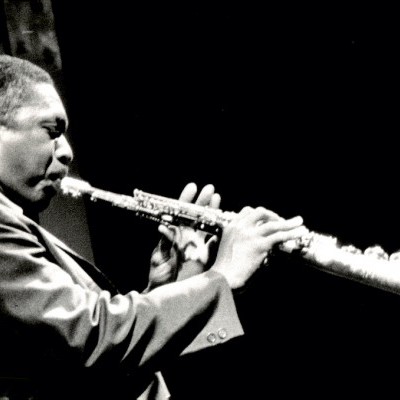
“It was just that suddenly … I could hear it,” Ravi Coltrane said of an epiphany he experienced during his late teens regarding his father’s music. “And it was almost like a calling, like something saying, ‘Hey, man, come on. It’s time to get serious.’ And the first time you really tune in and dial in and focus like that, it can be very life-changing.”
Sep 22, 2026 1:39 PM
Editor’s Note: Tomorrow, Sept. 23, is the 100th anniversary of John Coltrane’s birth. In honor of the tenor and…
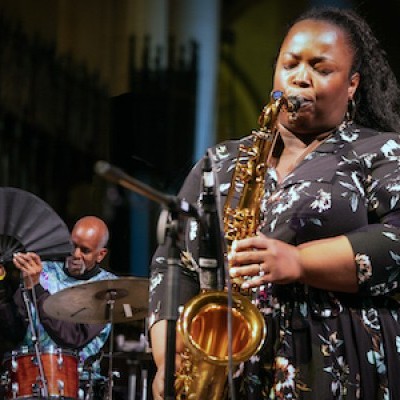
Camille Thurman took to the stage alongside bassist Kenny Davis and drummer Tommy Campbell for a rendition of Johnny Mercer’s “I’m An Old Cowhand” that recalled Rollins’ epochal 1957 trio outing Way Out West.
Oct 6, 2026 1:33 PM
As emcee Mark Ruffin noted at the commencement of an epic tribute to saxophonist Sonny Rollins at the Cathedral of…