Sep 22, 2026 12:26 PM
Hyde Park Jazz Fest on Chicago’s South Side to Present 20th Edition
The Hyde Park Jazz Festival will take place for the 20th time on the final weekend of September 2026. Beginning half…


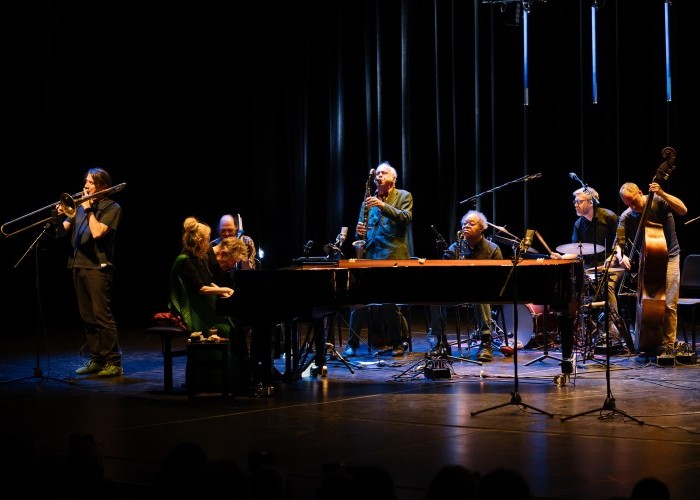
Jazzfest Berlin came to a fitting climactic finale with a performance by Globe Unity, a free-based 15-piece big band.
(Photo: Camille Blake)Berlin is a city deep in an array of histories and ghosts. So, as well, is its storied jazz festival, which dates back to the divided city circa 1964. It started out as a proud cultural beacon in West Berlin, steered into its early phase by Joachim-Ernst Berendt. Famously, for the inaugural edition, Dr. Martin Luther King Jr. wrote timeless words of celebration for the festival, the city and jazz itself.
His writing still serves as a guidepost to this festival’s values: “God has wrought many things out of oppression. He has endowed his creatures with the capacity to create and from this capacity has flowed the sweet songs of sorrow and joy that have allowed man to cope with his environment and many different situations. Jazz speaks for life. The blues tell the story of life’s difficulties, and if you think for moment, you will realize that they take the hardest realities of life and put them into music, only to come out with some new hope or sense of triumph.”
As of 2026, Jazzfest Berlin continues and deepens its commitment to jazz as a progressive and forward-leaning music, but with tentacles to the past intact. Take, for instance, the closing night gala set by the prophetically free-minded Globe Unity Orchestra (led by pianist Alexander Schlippenbach), in a 60th anniversary performance. Or consider the rare performance of Anthony Braxton’s complex and invigorating maze, Composition 151, recorded in the late ’80s/early ’90s and seldom performed, and done right by the JIB (Jazz Institute Berlin) edition of Braxton’s Creative Music Orchestra. These are slices of jazz history, avant-garde division, yet both of these milestone sets proposed timeless and temporary relevance.
A principal architect of the latest Berlin Festival mandate is Nadin Deventer, the artistic director for nine years now, in a post that used to change hands every few years. Recently, she has been collaborating on programming with Peter Margasak, the Chicagoan-turned-Berliner whose writings have been featured in DownBeat for many years. Together, they carve out a swath of fresh and uncompromising aesthetic directions.
For her part, Deventer also channels her long-held interest in expanding the festival-making concept to include unity engagement and programs for youth. Those peripheral elements in the festival, usually to the side of the public performance schedule, went public this year in the form of an intriguing collaborative film project, Dream Baby Dream (also the moniker of this year’s festival), which was screened a few times during the festival.
Braxton was clearly a centerpiece of the 2026 Berlin experience (Oct. 29–Nov. 1), as he was for his last trip here, in 2019. That year, he led Sonic Genome, sporting no fewer than 60 musicians. This year, between the opening night’s world premiere of a rhythm section-less septet and the JIB project, the vibrant 81-year-old firebrand legend again marshaled large musical forces, if falling shy of 60. (He had robust help from saxophonist and occasional sub-conductor James Fei, both in the large band and a new septet project.)
On opening night, introducing Braxton’s newly formed multinational septet (all saxes and tubas), Deventer—keenly interested in including women in festival programming—called him “a true bridge builder, between generations, styles and gender blending way ahead of his time.” Bridge-building then transpired onstage with this uniquely textured ensemble, between free play and modular segments of structured material, designed on the spot by Braxton’s sometimes “conduction” style direction.
This festival has long had, as one of its points of focus, attention on the art of the big band, in conventional and envelope-pushing forms. This year, the tradition continued but with a clearly more adventurous agenda—a boon to the cause and culture of the avant-big band.
Aside from the known commodities of Globe Unity and Braxton, spotlights went to enticing new projects, worth noting and remembering. Drummer-conceptualist Christian Lillinger’s rippling and engaging—and new music-spirited—Open Form for Society II, fitted with five keyboardists, including fellow jazz-classical adventurers Kaja Draksler and Corey Smythe.
The fiery Berlin-based Argentinian saxophonist Camilla Nebbia premiered a potent new 11-piece ensemble, also mixing jazz and chamber music instrumentation over terrain both with free blowing and navigation of her intricate designs. Her piece bore a poem-like title that somehow reflects the spirit of her music: the darkness, overwhelming and imposing, compelled me to light my own fires.
Also on the larger side, British pianist of note Alexander Hawkins debuted a new octet and new body of music. It left a strong impression, although we secretly missed hearing more of his superb piano playing, as he mostly yielded to his role as bandleader/conductor.
A very different kind of massed-instrumentation event took over the Kaiser Wilhelm Church (a Sunday afternoon tradition at the festival) with Densities, by the 12-piece trombone group called Bonecrusher (led by Matthias Muche) filling the sanctuary’s open acoustic with rich tones, chords, interlacing and clusters to mesmerizing ends.
Among the more compact ensembles demanding attention was cellist-bandleader Tomeka Reid’s innovative yet directly appealing quartet, featuring guitarist du jour Mary Halvorson, who later hopped over to the festival closing romp by Ches Smith’s “Clone Row.” Call it thinking/restless person’s party music. Otomo Yoshihide Jazz Quartet re-situated the sometimes noise-rooted Japanese musician in a semi-structured group, with nods to the ’60s models of Ornette Coleman and Eric Dolphy.
High on my list of “discoveries” (aka music I hadn’t been hip to previously) were acts showing up at jazz clubs in Berlin, away from the Festspiele HQ/compound. They came from Norway and Chicago: late sets in the cozied-up quarters of Quasimodo by inspired Norwegians Karoline Wallace and Norwegian bassist Ingebrigt Håker Flaten’s muscular band (Exit) Knarr (with musicians from varied locales); and a European debut by the supple Chicago-beloved trio Twin Talk, at the A-Trane venue.
Vocalist Wallace’s band, dipping into the recent album EON, ranged freely from noisy rock-infused energies to free-jazz, art poppy melodic turns and Nordic atmospheres, to captivating effect. Twin Talk establishes infectious and subtle interplay, with fluid dialoguing between members Dustin Laurenzi (tenor saxophone), Katie Ernst (acoustic bass, voice) and drummer Andrew Green. There is a pliable sound, occasionally reminiscent of another famous Chicago-stamped trio, Air.
It all came to a fitting climactic finale with Globe Unity—a moniker that Schlippenbach explained, in a pre-concert talk, were just composed of “two big words” and two big ideas. With memorable solo turns by trumpeter Axel Dörner, saxophonist Evan Parker, trombonist George Lewis and Schlippenbach’s gifted pianist wife, Aki Takase (the first woman in the 60-year history of this band, as Deventer pointed out), the set—surprisingly civil for a free-based 15-piece band—proved a perfect endpiece to another fine and chance-embracing festival encounter in Berlin.
To borrow MLK’s sentiment, jazz spoke for life here. DB
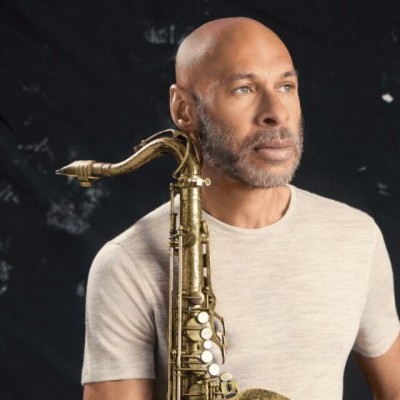
A solo concert by saxophonist Joshua Redman will close the first night of the Hyde Park Jazz Festival on Sept. 26.
Sep 22, 2026 12:26 PM
The Hyde Park Jazz Festival will take place for the 20th time on the final weekend of September 2026. Beginning half…
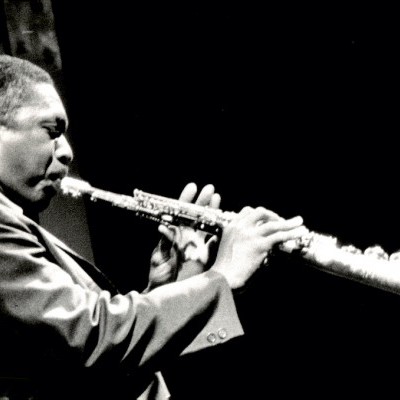
“It was just that suddenly … I could hear it,” Ravi Coltrane said of an epiphany he experienced during his late teens regarding his father’s music. “And it was almost like a calling, like something saying, ‘Hey, man, come on. It’s time to get serious.’ And the first time you really tune in and dial in and focus like that, it can be very life-changing.”
Sep 22, 2026 1:39 PM
Editor’s Note: Tomorrow, Sept. 23, is the 100th anniversary of John Coltrane’s birth. In honor of the tenor and…
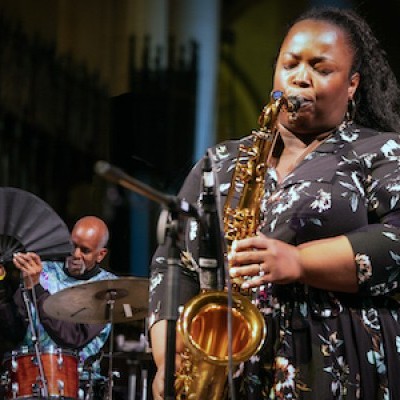
Camille Thurman took to the stage alongside bassist Kenny Davis and drummer Tommy Campbell for a rendition of Johnny Mercer’s “I’m An Old Cowhand” that recalled Rollins’ epochal 1957 trio outing Way Out West.
Oct 6, 2026 1:33 PM
As emcee Mark Ruffin noted at the commencement of an epic tribute to saxophonist Sonny Rollins at the Cathedral of…
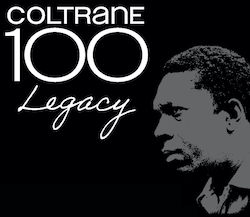
Record producer Bob Thiele’s classic photo that became the cover of John Coltrane’s landmark album A Love Supreme.
Sep 22, 2026 1:36 PM
A tribute to John Coltrane is one thing, but there is much more to the iconic saxophonist’s 100th anniversary…
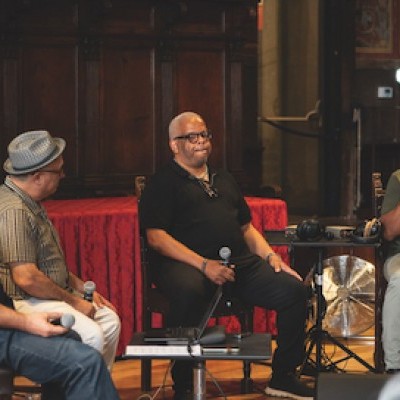
Ravi Coltrane (right) makes a point during a live Blindfold Test at the Umbria Jazz Festival while pianist Greg Burk (far left), journalist Ashley Kahn and trumpeter Terence Blanchard listen.
Oct 20, 2026 12:53 PM
The pairing of Terence Blanchard and Ravi Coltrane was billed as “The Miles/Coltrane Legacy,” a tour celebrating…