Sep 3, 2026 10:44 AM
In Memoriam: Cassandra Wilson, 1955–2026
Cassandra Wilson, a singer, songwriter and producer who was one of the most acclaimed and successful jazz vocalists of…


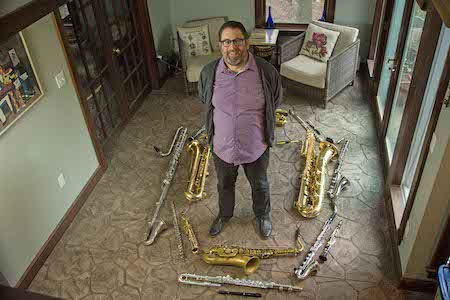
Andrew Bishop
(Photo: Courtesy University of Michigan)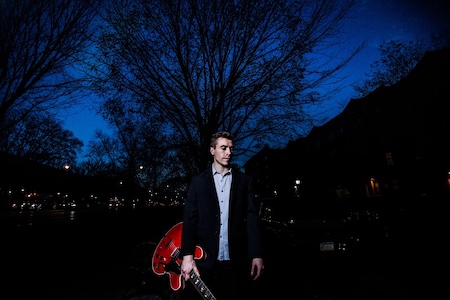
Quentin Angus
(Photo: Desmond White)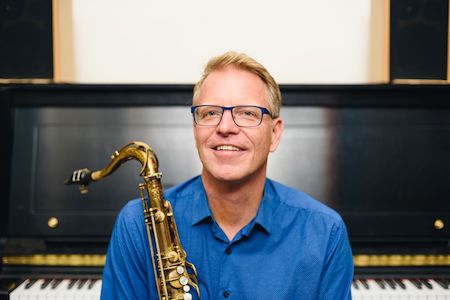
John Gunther
(Photo: Courtesy John Gunther)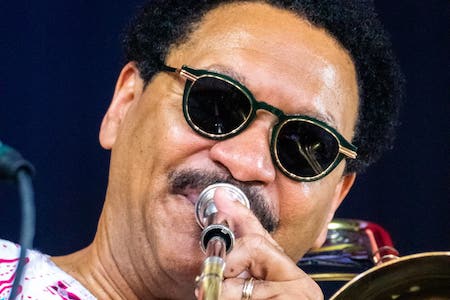
Delfeayo Marsalis
(Photo: Steve Rapport)Choosing a college to attend can be one of life’s big decisions. But once that’s decided, there’s the question of which major(s) to pursue at one’s chosen educational institution. DownBeat spoke with educators at a community college, two public universities and a private conservatory for insights into this decision-within-a-decision. Class is in session!
B.A., B.M.A. or B.F.A?
“The way we have kind of branded those two degrees that we offer is that the bachelor of music (B.M.A.) is your mainstream performance degree, and then the bachelor of fine arts (B.F.A.) is the more interdisciplinary degree,” says Andrew Bishop, DMA, Chair of Jazz and Contemporary Improvisation and Professor of Music at University of Michigan.
“The newest thing for us are our B.M.A.s or bachelor of musical arts,” says Alejandro Cortes, Assistant Teaching Professor of Musicianship at Roosevelt University’s Chicago College of Performing Arts. “They’re still very heavy performance degrees, and you still get your regular lessons and ensemble experiences. But you also have a concentration on the music industry or recording. The degree gives you the flexibility to explore what your interests are while still being grounded in that conservatory training.
“The bachelor of music is the heaviest performance degree,” he explains. “Then on the other side is the bachelor of arts. It’s still for students who want to play and pursue life in music. But it is a little bit more liberal arts-oriented. Then in the middle is that B.M.A., which is very flexible.”
Major Options, Seek Advice
The undergraduate years, and especially the early ones, are a time for exploration and self-realization. Admission counselors and educators are happy to discuss options.
“There are people who we meet and who we audition, and after talking to them it just seems like they’d be a better fit for another program,” says Cortes. “We ask them what their goals are and everything, and the things that they’re describing might be better supported by another program at CCPA.
“Our philosophy is to help students discover themselves and figure out what they want to do. We actually do have a fair number of students who might move into one degree over another because after a year they discover that that’s more of what they’re looking for.”
Since general education classes are often taken during freshman and sophomore years, it’s easier to switch majors early on. “By design, both of our degree programs start exactly the same,” Bishop says. “So we tried to make it as easy as possible to change.”
Did you enjoy those times when your high school band played for middle or elementary school students or the lessons you gave to younger instrumentalists? All five educators encouraged potential undergraduates to look into the possibility of a music education degree.
Or perhaps you enjoyed capturing your audition submission and want to learn more about the recording studio. Trombonist and Uptown Jazz Orchestra leader Delfeayo Marsalis sure did.
Marsalis started at Berklee the same year its studio degree launched, he recalls. He’d apprenticed in New Orleans music legend Allen Touissaint’s recording studio while still in high school and took full advantage of Berklee’s new offerings.
“I just alternated between studio time and playing the horn, and I started producing albums when I was still in school,” he says. “They had tape machines back then, and I spent a lot of time just stuffing tape.” Marsalis produced older brother Branford’s Royal Garden Blues (Columbia, 1986) the summer after his junior year and would go on to do the same for albums by the likes of his father Ellis and other older brother Wynton; pianists Marcus Roberts and Harry Connick Jr.; and saxophonist Courtney Pine.
Seeing Double, as in Majors
While it may seem like pairing another major with music is the undergraduate equivalent of training for an Olympic sport while also attending culinary school, it’s a popular if challenging option. A fifth year of undergraduate study is typically involved, and students often add AP credits from high school and attend summer quarters or semesters.
“You can come to CU, and you can do a Jazz Performance degree and also be a mechanical, electrical or engineering or computer science major,” says John Gunther, Ph.D., University of Colorado Boulder College of Music Thompson Jazz Studies Director and Professor of Jazz Studies. “There are also minors. There’s a real strong business minor, and there are also certificate programs, like in music entrepreneurship or music technology.
“I think that’s an advantage when you go to a bigger school,” he notes. “You have access to a lot of other different fields. And if you change your mind, we can help, too. We’ll have a student say, ‘I like music, but I don’t want to be a music major.’”
“I have a lot of friends from high school and college and beyond who are fantastic musicians,” says bassist/educator Katie Thiroux. “But they really wanted to study, say, biochemistry. They still play on the side, though.”
“One year, we had a trombone section that were all rocket scientists,” Gunther shares.
Bishop recalls undergraduates who went to medical or law school and one in particular who got his MBA from Harvard.
“Maybe one-third of our students, even up to about half some years, are double majors,” he says. “U of M has such a big engineering school that many of our double majors also study there. But we’ve had creative writing and political science double major recently.
“A good portion of the students who want to come to study here often have another interest. The second major is not necessarily a backup plan for them. I have two former students who went on to work for Google. Yuma Uesaka was one of them and placed in the [DownBeat] Critics Poll recently on clarinet.” (He placed second in the Rising Stars category.) “I think he quit Google, and now he’s just a musician and maybe does some freelance programming here and there.”
CCMA has a dual Performance and Education degree that takes five years, Cortes says. And Education majors are already required to play a primary instrument.
The Community College Track
Some high school students interested in pursuing more academic disciplines will first earn an Associate’s degree at a two-year community college. Tuition is considerably lower than private or even state colleges and universities, and transfers typically have a better chance of success than acceptance straight out of high school.
This is also an exciting option for jazz musicians.
“There are relationships with senior colleges that are called articulation agreements,” says Can M. Olgun, Ph.D., Instructor of Music and Deputy Chairperson Music and Art at Borough of Manhattan Community College.
“It means that basically the first two years of a four-year degree are taken care of when a student graduates and transfers to a partner senior college,” adds Quentin Angus, Ph.D., BMCC Assistant Professor of Music and Chairperson Music and Arts.
BMCC currently has articulation agreements with Hunter, Lehman and York Colleges and The City College of New York, which are all part of the public City University of New York or CUNY system. ”And we do have agreements that we’re currently working on with private institutions,” says Angus.
Potential students are asked what their end goal is and to work backwards from there: “That’s a question that comes up pretty early on when we advise students,” Olgun says. “We’ll typically say, ‘I know it’s early, but what are your plans after you graduate from BMCC? Do you have a college in mind?’
“And some students have a really clear interest and just tell us, ‘I’m really here to just learn jazz and pop, and I don’t want to worry about articulation agreements right now.’”
While most students graduate and take advantage of BMCC’s articulation agreements, some have gone on to schools such as Berklee College of Music, Manhattan School of Music and The New School. Others have finished up a year at BMCC and then earned a scholarship at a non-CUNY school. “But some of our best students enjoy the program so much that even though they could probably successfully audition early at a senior college without an articulation agreement, they quite often don’t,” says Angus.
The Journey and the Destination
To remix a popular saying, getting a music — and possibly other — degree for a jazz musician is as much about the journey as the destination.
“I personally was not a great student in high school,” Bishop admits. “But when I got to college, I did music degrees. By the time I finished the first one, I felt like I could have done just about anything.”
He’s now the proud owner of two bachelor’s degrees, two master’s degrees and a doctorate.
“You’re likely not going to graduate here and just be a bebop player,” Gunther concludes. “You’ve learned the skills to be a creative musician and improviser and composer who can really play just about anything.” DB
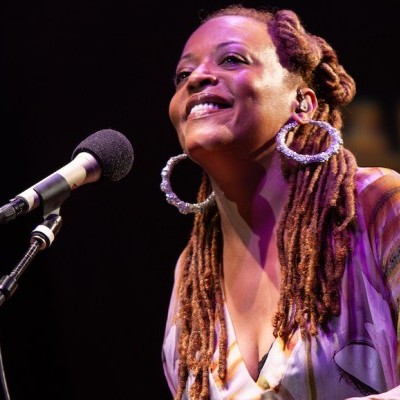
Wilson’s ability to connect to audiences helped her to win two Grammy awards and multiple other accolades. She was named an NEA Jazz Master in 2022.
Sep 3, 2026 10:44 AM
Cassandra Wilson, a singer, songwriter and producer who was one of the most acclaimed and successful jazz vocalists of…
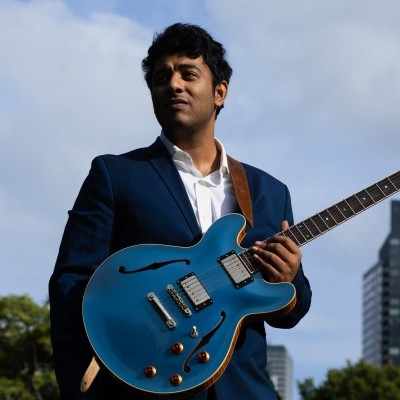
“The love from the jazz and music community restored my faith in humanity,” Walia wrote in an online post upon his release from detention at an ICE facility.
Aug 18, 2026 2:15 PM
Indian jazz guitarist and composer Pritesh Walia has been released after being unexpectedly detained by ICE and taken…
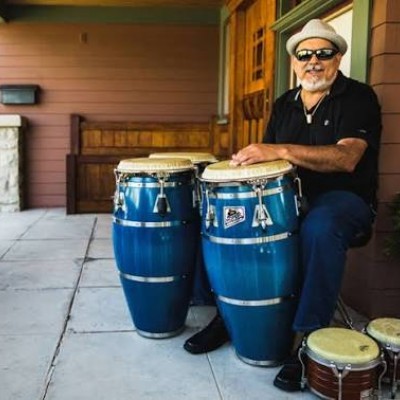
Percussionist Poncho Sanchez was among the artists scheduled to perform at the now-canceled inaugural LA Jazz Festival.
Aug 11, 2026 12:53 PM
The inaugural LA Jazz Festival, originally scheduled to run Aug. 7–23 with dozens of events across Los Angeles’…
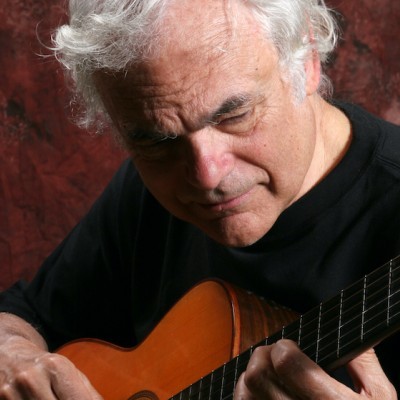
Bertoncini was a specialist and advocate for the nylon-string acoustic guitar, turning down high-profile opportunities that were unsuited to the sound and techniques that he used with that instrument.
Sep 1, 2026 11:06 AM
Gene Bertoncini, an esteemed jazz guitarist, composer, arranger and educator, died Aug. 29 at the Lillian Booth Actors…
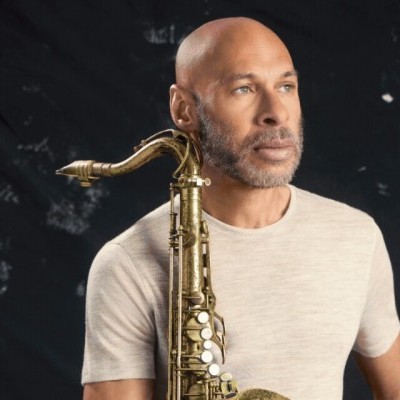
A solo concert by saxophonist Joshua Redman will close the first night of the Hyde Park Jazz Festival on Sept. 26.
Sep 22, 2026 12:26 PM
The Hyde Park Jazz Festival will take place for the 20th time on the final weekend of September 2026. Beginning half…