Sep 3, 2026 10:44 AM
In Memoriam: Cassandra Wilson, 1955–2026
Cassandra Wilson, a singer, songwriter and producer who was one of the most acclaimed and successful jazz vocalists of…


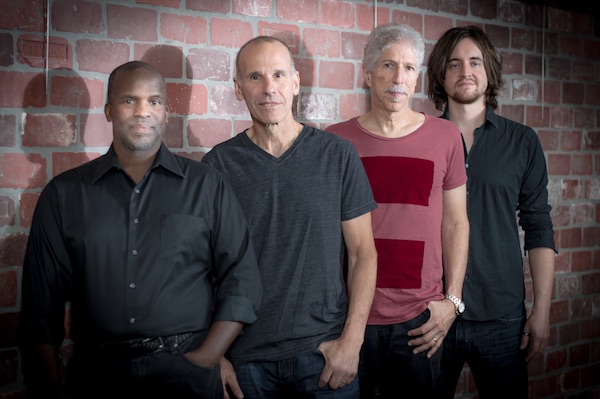
Will Kennedy (left), Russell Ferrante, Bob Mintzer and Dane Alderson performed at Ferring Jazz Bistro in St. Louis Sept. 20–23.
(Photo: Courtesy of the artist)The Yellowjackets opened a Sept. 23 night show at the Ferring Jazz Bistro in St. Louis with the catchy, upbeat melody of the song “Spirit Of The West.” The quartet, known for its unique brand of jazz fusion, put listeners in a mood to relax.
Yet despite the sense of calm, the band held the audience in sway with an engaging set. That was due in no small part to one of the Yellowjackets’ most renowned qualities: unpredictability.
It was musical comfort after a difficult week in St. Louis. There had been protests across the city following the acquittal of a white police officer charged with first-degree murder for shooting a black man. And it was not easy for locals to find relief in music. A number of bands that had been scheduled to play canceled their shows because of security concerns. Outside a Billy Joel concert, protesters chanted “no justice, no profits.”
But Jazz St. Louis, which runs shows at the Bistro, is a nonprofit organization and as Yellowjackets saxophonist Bob Mintzer put it, “a great organization” that presents “shows all for the right reasons.”
The band, in its 37th year, has had a number of different lineups, but Mintzer, pianist Russell Ferrante and drummer Will Kennedy have performed together for much of the band’s tenure. Bassist Dane Alderson played at the Bistro and on the band’s most recent album, Cohearence, released on Mack Avenue Records in 2016.
Between songs from the band’s 1990s catalog—“Spirit Of The West” and “Red Sea”—Mintzer switched from a tenor saxophone to an electric wind instrument (EWI), playing peppy melodies over Ferrante’s ambient fills. It got interesting when the two musicians layered licks atop one another. Kennedy, meanwhile, remained deep in the pocket, using just the snare drum and the crash cymbal. Ferrante took the latter song into a cool-jazz space, then played faster, choppier lines as Alderson laid a steady bass foundation underneath.
On the next song, “Out Of Town,” from the 1987 album Four Corners, Alderson provided a nice swing rhythm while Ferrante and Mintzer continued to skillfully trade solos. Ferrante built his solo around two-note phrasing before ending with a flourish across the keys on a grand piano. Mintzer had a bluesy solo in which he asked provocative questions and offered a series of snappy responses.
Kennedy delivered one of the highlights of the show in his solo at the end of the song. He built it around drum rolls on the snare, mixing in rim shots off the middle of his sticks. After making an idea known on the skins, he would hammer it home on the alloy and then moved steadily back and forth and side to side across his kit. Even at low volumes he remained expressive, using a light touch to bring the solo to a close.
The band followed with the title track of Cohearance. With its absence of electronic effects, the song had an almost classical sound. Despite the fact that it came from a band noted for its fusion roots, it didn’t feel disjointed from the rest of the show.
From there, the concert took a funkier turn, pivoting on a song titled “Dewey (A Tribute To Miles Davis),” on which Mintzer returned to the EWI. In one section, he moved into a lower register—while Alderson reminded the audience that the bass is the real engine of funk.
It was the Yellowjackets’ 15th year performing at the Bistro, and the last night of a four-night run. The occasion prompted Mintzer to comment on how extended runs like this are a dying convention.
“Jazz groups used to hone their craft—like in New York City at Birdland, they would play for a month or two months at a time,” said Mintzer during the first set. “That dwindled to a week at a time, and now more often than not, it’s one or two nights. So we love this.”
The band closed the set with “Why Is It” off their 2011 Mack Avenue album, Timeline. Here again, the band subverted expectations. Each band member had a chance to demonstrate his chops. Alderson was especially impressive, crafting a musical conversation with his bass guitar by using a looping machine to build his phrases atop one another. The groove got many in the crowd to bob their heads. The person next to me smiled and said, “Never seen this at a jazz show.”
Turns out it was also his first time seeing the Yellowjackets. DB
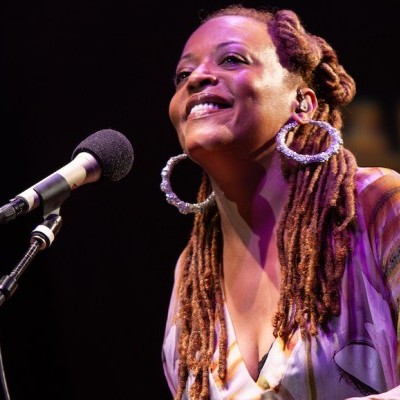
Wilson’s ability to connect to audiences helped her to win two Grammy awards and multiple other accolades. She was named an NEA Jazz Master in 2022.
Sep 3, 2026 10:44 AM
Cassandra Wilson, a singer, songwriter and producer who was one of the most acclaimed and successful jazz vocalists of…
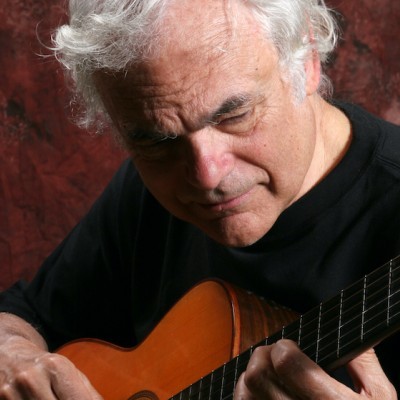
Bertoncini was a specialist and advocate for the nylon-string acoustic guitar, turning down high-profile opportunities that were unsuited to the sound and techniques that he used with that instrument.
Sep 1, 2026 11:06 AM
Gene Bertoncini, an esteemed jazz guitarist, composer, arranger and educator, died Aug. 29 at the Lillian Booth Actors…
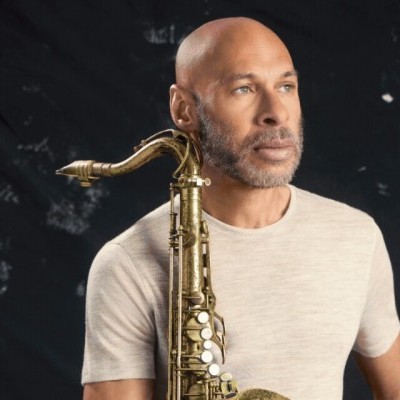
A solo concert by saxophonist Joshua Redman will close the first night of the Hyde Park Jazz Festival on Sept. 26.
Sep 22, 2026 12:26 PM
The Hyde Park Jazz Festival will take place for the 20th time on the final weekend of September 2026. Beginning half…
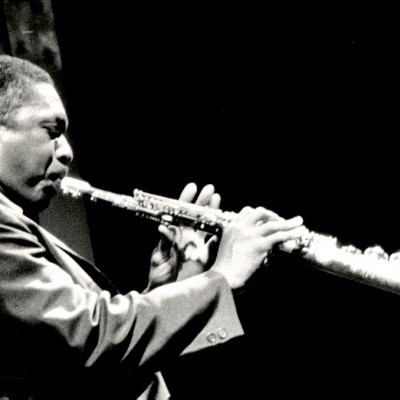
“It was just that suddenly … I could hear it,” Ravi Coltrane said of an epiphany he experienced during his late teens regarding his father’s music. “And it was almost like a calling, like something saying, ‘Hey, man, come on. It’s time to get serious.’ And the first time you really tune in and dial in and focus like that, it can be very life-changing.”
Sep 22, 2026 1:39 PM
Editor’s Note: Tomorrow, Sept. 23, is the 100th anniversary of John Coltrane’s birth. In honor of the tenor and…
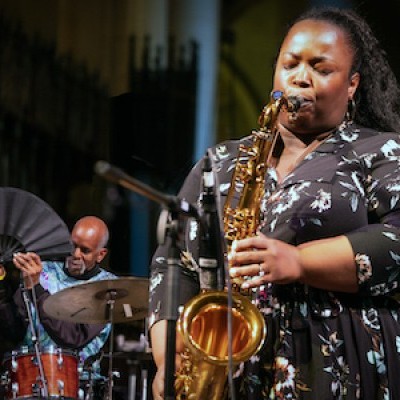
Camille Thurman took to the stage alongside bassist Kenny Davis and drummer Tommy Campbell for a rendition of Johnny Mercer’s “I’m An Old Cowhand” that recalled Rollins’ epochal 1957 trio outing Way Out West.
Oct 6, 2026 1:33 PM
As emcee Mark Ruffin noted at the commencement of an epic tribute to saxophonist Sonny Rollins at the Cathedral of…