Sep 3, 2026 10:44 AM
In Memoriam: Cassandra Wilson, 1955–2026
Cassandra Wilson, a singer, songwriter and producer who was one of the most acclaimed and successful jazz vocalists of…


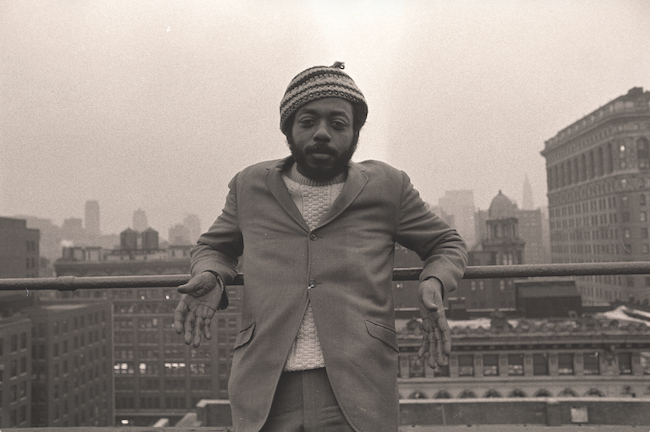
Charles Tyler in New York, 1974.
(Photo: David Glaubinger/Frederiksberg Records)The most striking, unexpected music on these archival releases is from Charles Tyler: Voyage From Jericho (Frederiksberg; ★★★★ 44:26). Tyler (1941–’92) was brought up in Indianapolis, the contemporary of another great alto player, James Spaulding. He moved in 1960 to Cleveland, where he worked with Albert Ayler, then New York, where he was the most constant member of the tenorist’s groups, 1963–’66. He recorded as leader for ESP in 1966 and 1967. Jericho, from 1974, is his magnum opus, his first recording on baritone saxophone as well as alto. It features trumpeter Earl Cross, bassist Ronnie Boykins — both Sun Ra alumni — and drummer Steve Reid. Alto saxophonist Arthur Blythe appears on two tracks.
The title piece has a march-like opening and sets up a blistering pace. On only his third recording, Blythe’s vibrato is more obvious, while Tyler’s big tone and more deliberate sound, not heard on alto till the second track, “Return To The East,” can appear delicate. The latter track has a plangent but lugubrious theme, then shifts to a loose Latin feel. The furious “Just For Two,” the sole composition by Cross, is the emotional apex. “Children’s Music March” is stern and bellicose. Tyler is a contemporary of the better-known Oliver Lake and Julius Hemphill and their equal as instrumentalist and composer. His work here is close to Ornette Coleman free-bop, but while Ornette has lightness, wit and lyricism, Tyler is darker, martial, sometimes stentorian.
Ordering info: frederiksbergrecords.bandcamp.com
Red Norvo: The Secret Session (Dot Time; ★★★ 45:25) was made in 1942, when the AFM strike closed the studios. Norvo persuaded an engineer to let his band in. The results are finally available thanks to trombonist Eddie Bert, who provided the tapes. Norvo (1908–’99) joined Paul Whiteman in the ‘20s and Benny Goodman’s sextet in 1944, shifting from marimba to vibraphone. He worked with Woody Herman (1946) then led trios with guitar and bass, notably with Tal Farlow and Charles Mingus (1950–’51). As here, he was very successful in making the transition from swing to bop, epitomized here by “One Note Jive,” with Aaron Sachs on hypodermic clarinet. Norvo is on xylophone, with Shorty Rogers (trumpet), Eddie Bert (trombone), Aaron Sachs (reeds) and rhythm. The highlight for me is a joyous “Liza,” with taut, lucid soloing from the leader and an exciting conclusion. Norvo usually played vibraphone without vibrato, almost like a xylophone, and his improvising is influenced by Teddy Wilson’s piano style.
Ordering info: dottimerecords.com
Paul McCandless plays oboe, English horn, bass clarinet and soprano saxophone. In 1970, with Messrs Towner, Moore and Walcott, he formed Oregon. Hearsay (1988) and Premonition (1992) appeared on Windham Hill, the latter produced by bassist Steve Rodby and featuring Lyle Mays (piano), Fred Simon (keyboards) and Mark Walker (drums). That’s the group on this 1992 live date, Live At Kimball’s East (Moosicus ★★ 73:00), captured in the Bay Area on a DAT cassette then forgotten. It’s fusion, not jazz-rock, and mention of Windham Hill raises immediate suspicions. The album is bland, tedious, pointlessly virtuosic and sometimes unintentionally comic: I struggled to reach the end.
Ordering info: moosicus.com
The restored, remastered Duke Ellington Orchestra: Copenhagen 1964 (Storyville ★★★★ 69:15) mixes classics and compositions from Duke’s recent Far East tour in an excellent live recording. The Orchestra is at the height of its powers, with soloists including Cootie Williams (trumpet), Lawrence Brown (trombone) and Johnny Hodges, Paul Gonsalves and Harry Carney (saxophones). There’s an atmospheric medley of “Black And Tan Fantasy,” “Creole Love Call” and “The Mooche,” driven by Ellington’s modernist piano stylings. A highlight is the ballad “Happy Reunion.” Apart from a short piano introduction, it’s Paul Gonsalves throughout, with a long, breathy, seductive tenor-saxophone solo: a signature stylist. An eventful Harlem suite features Cootie Williams. There’s a selection from probably Ellington’s finest late work, The Far East Suite, including the avant-garde modal “Amad,” built on a long pedal-point. There are also selections from Timon Of Athens, as well as, finally, “Kinda Dukish,”“Rockin’ In Rhythm” and “Jones.” DB
Ordering info: storyvillerecords.com
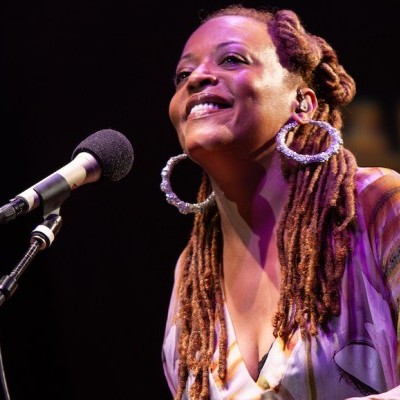
Wilson’s ability to connect to audiences helped her to win two Grammy awards and multiple other accolades. She was named an NEA Jazz Master in 2022.
Sep 3, 2026 10:44 AM
Cassandra Wilson, a singer, songwriter and producer who was one of the most acclaimed and successful jazz vocalists of…
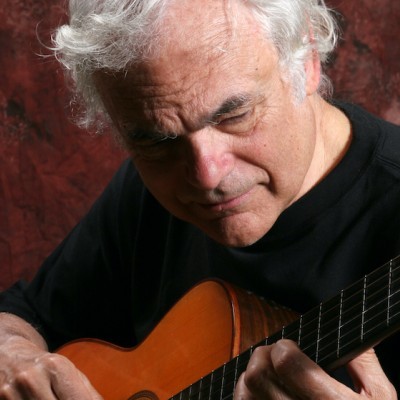
Bertoncini was a specialist and advocate for the nylon-string acoustic guitar, turning down high-profile opportunities that were unsuited to the sound and techniques that he used with that instrument.
Sep 1, 2026 11:06 AM
Gene Bertoncini, an esteemed jazz guitarist, composer, arranger and educator, died Aug. 29 at the Lillian Booth Actors…
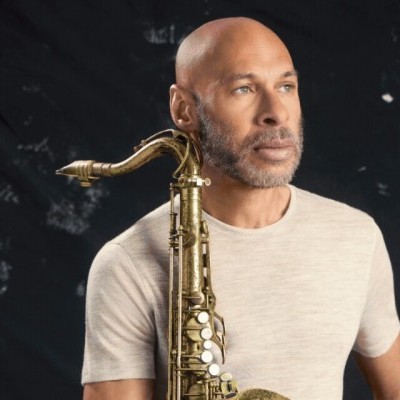
A solo concert by saxophonist Joshua Redman will close the first night of the Hyde Park Jazz Festival on Sept. 26.
Sep 22, 2026 12:26 PM
The Hyde Park Jazz Festival will take place for the 20th time on the final weekend of September 2026. Beginning half…
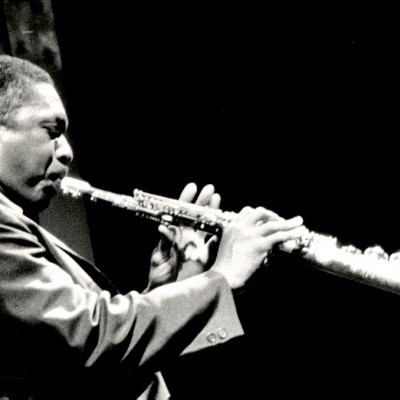
“It was just that suddenly … I could hear it,” Ravi Coltrane said of an epiphany he experienced during his late teens regarding his father’s music. “And it was almost like a calling, like something saying, ‘Hey, man, come on. It’s time to get serious.’ And the first time you really tune in and dial in and focus like that, it can be very life-changing.”
Sep 22, 2026 1:39 PM
Editor’s Note: Tomorrow, Sept. 23, is the 100th anniversary of John Coltrane’s birth. In honor of the tenor and…
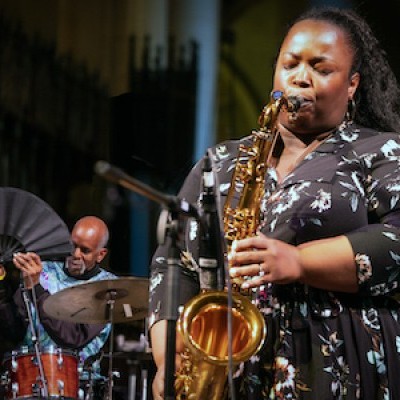
Camille Thurman took to the stage alongside bassist Kenny Davis and drummer Tommy Campbell for a rendition of Johnny Mercer’s “I’m An Old Cowhand” that recalled Rollins’ epochal 1957 trio outing Way Out West.
Oct 6, 2026 1:33 PM
As emcee Mark Ruffin noted at the commencement of an epic tribute to saxophonist Sonny Rollins at the Cathedral of…