Mar 30, 2026 10:30 PM
Flea Finds His Jazz Thing
In the relatively small pantheon of certifiable rock stars venturing into the intersection of pop music and jazz, the…

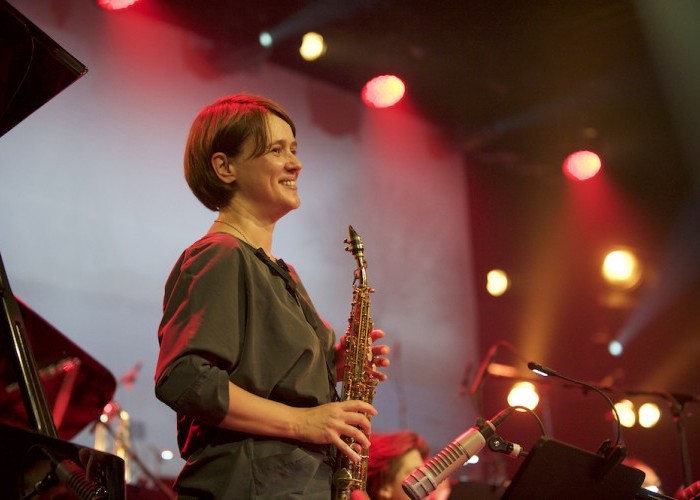
Reedist Ingrid Laubrock said she relishes the freedom that comes with recording for independent labels like Relative Pitch and Germany’s Intakt, but remains skeptical of the music industry’s digital shift.
(Photo: Helmut Berns)Less and less, you dole out a buck per cut, $10 per album; more and more, you access a streaming service for a nominal few each month. Or just play music for free and let ads assail you.
The streaming model’s hardly sustainable for pop acts whose tracks are digitally spun thousands of times a month. For jazz players and those who’ve come to be called “creative musicians,” the economics are even more disastrous.
“A drastic amount of money has been removed from the system through the devaluation of intellectual property rights,” said William Brittelle, co-founder and artist at New Amsterdam Records, a nonprofit label specializing in work by ambitious composers and performers of no fixed genre. But you know the old saw about crisis and opportunity. “Now, there’s not really an excuse not to do what you want to do, because everything is so difficult.”
New Amsterdam releases tend toward the unclassifiable, like the sui generis John Hollenbeck Large Ensemble album All Can Work, on which Billy Strayhorn, Steve Reich and Cary Grant’s LSD habits all provide touchstones. “There’s like five hyphens describing any project,” Brittelle said. And what it costs to create the music is wildly variable. What it costs to buy it is more concrete: For unlimited streams and downloads on the artist-friendly music site Bandcamp, in formats and bitrates from MP3 to Flac and AIFF, All Can Work runs $8 for about 70 minutes of music.
“We need to try to help our audience understand that the primary income-earning cycle of a project needs to be in the run-up to the release, not post-release,” Brittelle said.
So, New Amsterdam and others are experimenting with something like a patronage model, in this case a subscription service: $75 for digital downloads of a year’s worth of new releases from the label, downloadable releases from the back catalog, plus subscriber-exclusive recordings.
“The costs that our artists incur—the production cost, the commission cost—everything is upfront. That’s where they need help, and there is not enough master-oriented income on the other end to offset that. That’s where patronage comes in.”
New Amsterdam, like other upstart labels and many creative musicians, are banking on an audience not of streamers, but of supporters. Trumpeter and composer Dave Douglas also has embraced the subscription model, as well as the Bandcamp platform. Douglas founded Greenleaf in 2006—not long after completing his contract with RCA and at a perilous time for the music business.
“Everyone was saying ‘Oh, the industry is dying now, and you just started your label,’” Douglas recalled. “To me, it seemed more like a moment of opportunity for artists.”
Greenleaf has released LPs from players like Rudy Royston, Linda May Han Oh, Nicole Mitchell and Donny McCaslin. And Douglas has seized freedom for himself, too. In December 2006, independence (and online distribution) offered him the chance to make available every set that his longstanding quintet played during a week at the Jazz Standard, more than 12 hours of music. The bandleader’s ostensibly revisiting the idea for his Brazen Heart Live At Jazz Standard, a four-disc set with saxophonist John Irabagon, pianist Matt Mitchell, bassist Oh and drummer Royston. He’s also recently released UPLIFT: Twelve Pieces For Positive Action In 2018, a subscriber-only offering with a band that includes saxophonist Joe Lovano, guitarists Mary Halvorson and Julian Lage, bassist Bill Laswell, drummer Ian Chang.
“Every set is different,” Douglas said about that earlier set of live recordings. “My quintet was playing 50 tunes from memory that I’d written over the years; most we only played once in the course of the week. After the first night, I came home and was like, ‘I don’t think I can do this, this is a really bad idea.’ But I got up the next day and people around the world had already started to download it.”
It’s $100 to stream or download all 79 tracks of Douglas’ 2006 Live At The Jazz Standard via Bandcamp, something like the going rate of pop music. But with patronage the math gets trickier: You can download Live At The Jazz Standard, as well as 60-plus additional Greenleaf releases for the price of an annual subscription, which starts at $75. At some point, the question stops being about the economics of the music and becomes about the sad truth of time. Would a listener even have time to explore it all? Besides the live Douglas stuff, there’s Royston’s Flatbed Buggy, Greg Ward’s large ensemble work Touch My Beloved’s Thought and dozens of other recordings.
With his subscription model, Douglas has managed to summon in his fans both a sense of being a partner and the promise of other site’s here’s-everything-ever-recorded abundance. Pigging out neither is cost prohibitive, nor exploitative.
OTHER TOP-NAME JAZZ ARTISTS have moved online, too. Saxophonist and composer Rudresh Mahanthappa sells MP3s of his latest release, Agrima, on his own website for $2.50, and Bill Frisell offers 22 live recordings on his site, most at $10.99 for MP3s or $13.99 for higher quality downloads. The saxophonist and composer Ingrid Laubrock, meanwhile, relishes the freedom that comes with recording for independent labels like Relative Pitch and Germany’s Intakt, but remains skeptical of the music industry’s digital shift.
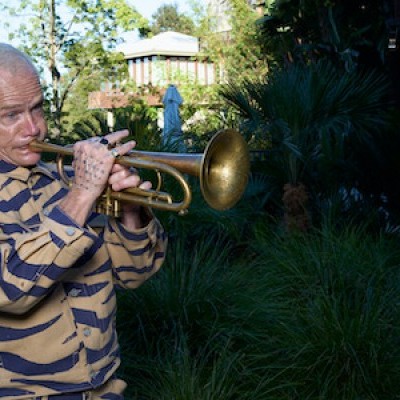
“Cerebral and academic thought is a different way to approach music,” Flea says of his continuing dive into jazz. “I’ve always relied on emotion and intuition and physicality.”
Mar 30, 2026 10:30 PM
In the relatively small pantheon of certifiable rock stars venturing into the intersection of pop music and jazz, the…
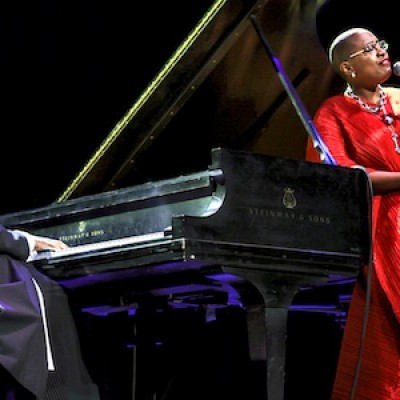
Cécile McLorin Salvant busts out Jelly Roll Morton’s “The Murder Ballad” at Big Ears, here with pianist Sullivan Fortner.
Apr 7, 2026 1:21 PM
There’s pluralism, then there’s PLURALISM! — and then there’s Big Ears. Thurston Moore, who participated in…
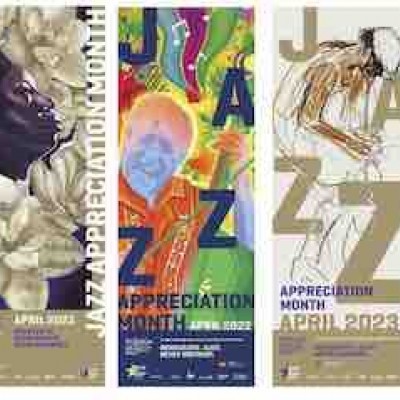
Each of the 25 JAMs has delivered a poster featuring a jazz legend that is sent out to schools across the nation. This year’s poster features Tony Bennett.
Mar 30, 2026 10:20 PM
Every April for the past quarter century, something remarkable has happened across the United States and far beyond.…
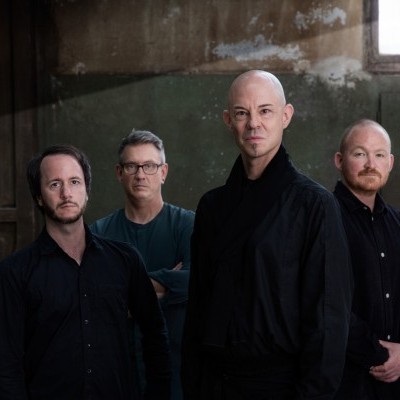
“We thought it’s important that Ronin has a new statement,” said Nik Bärtsch of his band’s latest album, Spin. “The sound is differently produced, so it reflects more of who we are.”
Apr 21, 2026 10:00 AM
Nik Bärtsch cuts an imposing figure on stage. He’s unmistakable with his soul patch, shaven head and black attire.…
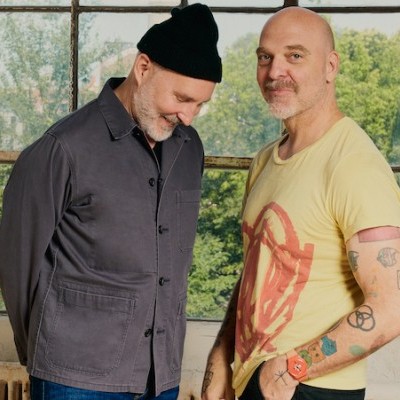
Dave King (left) and Reid Anderson offer insights into why The Bad Plus’ chemistry was cool, the accomplishments many and its longevity so fruitful.
May 12, 2026 11:42 AM
The scene still sticks with me. I had heard the oddball name of this new group being dropped around town, and…